
3 Days in Lisbon: The Perfect Itinerary (From Someone Who Lives Here)

I’m Portuguese by heritage, and it took me until I was 32 to finally visit Portugal. I came for three weeks in 2016, with a plan to explore Lisbon, Évora and the Algarve. I wanted to explore and experience the country my family came from, eat the food I’d grown up with, and understand what Portugal actually felt like beyond the stories and the nostalgia.
Lisbon answered all of that and then some. By the end of the first week, standing at the top of the Rua Augusta Arch and overlooking the terracotta rooftops, I remember thinking: this is where I want to live.
A year later, I moved! That was nearly nine years ago, and Lisbon still catches me off guard as I continue to find corners of this beautiful city that I haven’t seen before.
I’ve spent the better part of a decade exploring this Lisboa properly, not just the famous streets but the side alleys, the neighbourhood restaurants, the hidden courtyards that most visitors walk straight past.
This guide is the itinerary I’d give a close friend visiting for 3 days in Lisbon: honest, personal, and built around what actually makes this city worth falling for.
Disclaimer: This post contains affiliate links. If you book through these links, I may earn a small commission at no extra cost to you. This helps support Travel Boo and allows me to keep creating free content. All recommendations are based on my own experience.
✈️ Plan Your Trip to Lisbon
🏨 Where to stay: Browse hotels in Lisbon
🚆 Getting there: Compare trains, buses & flights with Omio
🎟️ Top tours & experiences: Browse Lisbon activities on GetYourGuide
🚗 Car rental: Compare car rental deals with Discovercars
When to Visit Lisbon
Lisbon has genuinely good weather for most of the year, which makes this question trickier than it sounds. My honest answer: aim for May, June, or late September through October.
May and June hit a sweet spot. The days are long, the city is warm but not suffocating, and the jacaranda trees you’ll find scattered through the city are in full purple bloom. It’s one of the most beautiful things I’ve seen in any city.
July and August bring stifling heat and serious crowds. I live here and I still find July and August exhausting. Queues are long, popular restaurants are packed, and the city can feel like it’s running on tourist fumes. If those are the only months you can travel, go, but manage expectations.
September and October are genuinely underrated. The summer crowds start to thin out somewhat, the weather is still warm enough for sitting outside, and the city feels a bit more like itself again. And if you’re considering winter, don’t rule it out. December in particular has a lovely festive energy. You can read more in my guide to spending Christmas in Portugal.
💡 Insider Tip
The Festa de Santo António runs throughout June 12th and 13th and transforms Lisbon into one long street party. Sardines grilling on every corner, music everywhere, locals dancing in the Alfama alleyways. If your dates overlap with it, consider yourself lucky – but be warned, there will be crowds, it’s packed!
Getting to Lisbon
Lisbon’s Humberto Delgado Airport sits just a few kilometres from the city centre. You can be in Baixa by metro in around 30 minutes from the airport, which is one of the more pleasant airport connections in Europe.
Most major European cities have direct flights, and TAP Air Portugal runs transatlantic routes from the US and Canada. For trains, buses, or comparing transport options across Europe, I’d recommend checking Omio for the best routes and prices.
Getting Around Lisbon
Lisbon is honestly compact enough that you can walk most of the centre, and that’s genuinely the best way to experience it. The city reveals itself slowly on foot, one tiled doorway and hidden viewpoint at a time.
The metro is clean, reliable, and inexpensive if you need to cover more ground. Uber and Bolt are both widely used, cheap by most European standards, and particularly useful for getting between neighbourhoods without tackling the hills. I use Bolt regularly and rarely wait more than a few minutes.
One important note for 2026: all three of Lisbon’s historic funiculars (Glória, Bica, and Lavra) are currently closed indefinitely following a tragic accident on the Glória funicular in September 2025. The Santa Justa Elevator is also currently out of service for maintenance. Both are worth knowing about in advance so you’re not caught out.
💡 Insider Tip
If walking the hills starts to feel like hard work, just grab an Uber. A ride across central Lisbon typically costs €4-7, and if you’re travelling as a group it’s often cheaper than public transport. Bolt tends to be slightly more affordable than Uber here.
If you don’t mind the hills and do plan to walk, wear shoes with proper grip. Lisbon’s cobbled “calçadas” (sidewalks) are beautiful but they can be deceptively slippery, not just on rainy days but in the dry heat of summer too when the stones get polished smooth. Flip flops, heels, or thin-soled shoes will make for a miserable afternoon.
Where to Stay in Lisbon
For a 3-day stay, I’d recommend basing yourself in Chiado, Baixa, or Príncipe Real. All three put you within easy reach of the main sights without trapping you in a pure tourist bubble. Chiado in particular has a good mix of character and convenience.
Alfama is atmospheric but the steep streets get old fast as a base. Avenida da Liberdade is great for a splurge. For a full breakdown by neighbourhood, read my complete guide to where to stay in Lisbon, or click the map below to search accommodation options.
Day 1: Downtown Lisbon, Chiado & Príncipe Real
A heads-up before you start: this is a full day of walking, and Lisbon’s hills are real. The route is designed so you do the uphill section while your legs are fresh, and spend the afternoon walking back downhill.
But if you have mobility concerns, or simply don’t want to tackle the climbs on foot, an Uber or Bolt to any of the higher stops takes minutes and costs next to nothing. I’ve included a shortened version of the day at the bottom of this section too.
Stop 1: Parque Eduardo VII

Start the day at the top of Parque Eduardo VII, where a viewing platform gives you a first proper sweep of the city: the formal hedged gardens falling away symmetrically towards Avenida Liberdade, the river glinting beyond the rooftops, and São Jorge Castle sitting on its hill to the east. It’s a good way to orient yourself before you dive in.
On your left as you head downhill through the park, look for the Pavilhão Carlos Lopes, a striking yellow building that most people walk straight past.
Stop 2: Avenida Liberdade

Walk down through the park and continue along Avenida Liberdade. It’s one of the grandest boulevards in the city, all wide tree-lined pavements, designer boutiques, and kiosks selling coffee and beer under the shade. I can’t afford most of what’s sold here, but I walk it regularly anyway. There’s a particular pleasure in a slow stroll down a beautiful avenue with a coffee in hand.
Stop 3: Fábrica da Nata
Before you reach Rossio, make a quick detour to Fábrica da Nata for your first pastel de nata. These are the famous Portuguese custard tarts, best eaten warm with a dusting of cinnamon and icing sugar. You’ll encounter several competing versions across the city today and tomorrow. Consider this your baseline – you’ll definitely want to try them all.
Stop 4: Casa do Alentejo (Hidden Gem)
Around the corner on Rua das Portas de Santo Antão 58, easy to miss behind an ordinary door, is one of my favourite Lisbon secrets. Walk through and up the staircase and you’ll find yourself standing in a magnificent Moorish courtyard: arched colonnades, decorative tilework, a central fountain, stained glass lanterns overhead. It’s completely free to visit and completely astonishing.
The building started life as a 17th-century palace and later became Lisbon’s first casino. Today it’s a cultural centre for the Alentejo community. Most tourists walk straight past it, which is exactly why it’s worth going in.
💡 Insider Tip
Don’t be shy walking through the door of Casa do Alentejo. It genuinely looks like you’re entering somewhere private. You’re not. Head up the stairs and keep going.
Stop 5: Rossio Square
Rossio is the traditional heart of the city, the black-and-white wave-patterned stone, the twin baroque fountains, the ornate façade of the Rossio train station on one side. It’s worth a few minutes to absorb the scene. This is also the station you’ll use if you’re planning a day trip to Sintra.
Stop 6: Rua Augusta & the Arch

Head south along Rua Augusta, the main pedestrian shopping street. Resist the restaurants along here. Most are tourist traps and there are much better options later. Also be aware that you’ll likely be approached by men offering to sell you something. In most cases it’s harmless herbs rather than anything else. Simply ignore them and keep walking.
At the far end, you’ll arrive at the Rua Augusta Arch. For €4.50, you can take the lift up to the viewing platform at the top. Relatively few people bother, which means the views over Praça do Comércio and the river are yours without the crowd.
Standing up there for the first time in 2016 was the moment I decided I wanted to live in this city. If you make it to the top, you’ll understand why.
Stop 7: Praça do Comércio & the Riverfront
Walk through the arch and into Praça do Comércio, framed by yellow arcaded buildings on three sides and open to the river on the fourth. The square hosts concerts and events during summer months, worth checking if anything is on during your stay.
Take a few minutes at the waterfront. The Tagus is wide enough here that it feels more like a sea. Watch the ferries crossing to the south bank.
Stop 8: Up through Chiado
Now head back into the city and uphill through Chiado. On the way, you’ll pass the Santa Justa Elevator, Lisbon’s famous iron lift designed in the style of Eiffel. It’s currently closed for maintenance, but worth a look from the outside. The Gothic revival ironwork is genuinely beautiful.
Stop 9: Livraria Bertrand
A couple of minutes further up, on Rua Garrett, is Livraria Bertrand, which holds the Guinness World Record as the oldest operating bookshop in the world, open since 1732. Even if you’re not buying, it’s worth stepping inside. The original rooms at the back have a quiet, slightly worn elegance that modern bookshops can’t manufacture.
Stop 10: Praça Luís de Camões
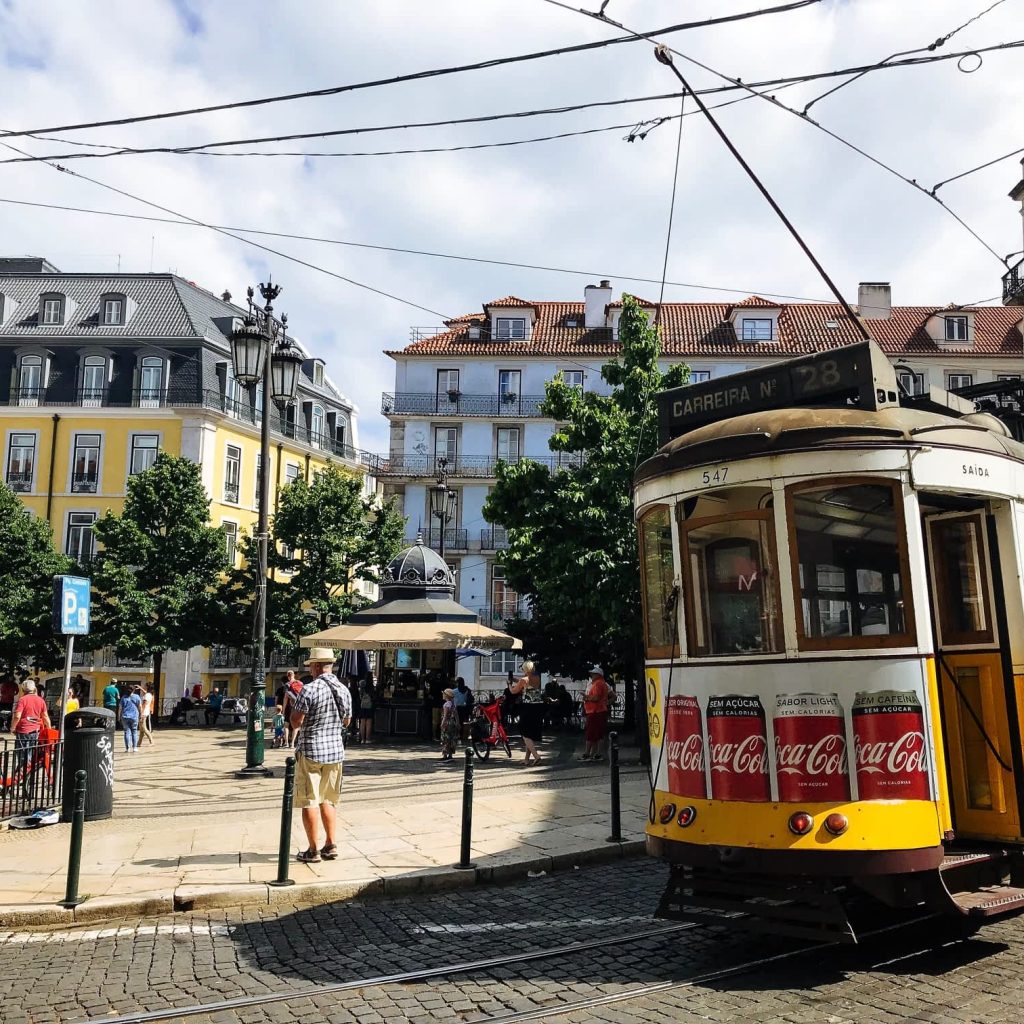
A short walk further brings you to Praça Luís de Camões, a busy square named after Portugal’s greatest poet. Trams rattle through, locals sit on the steps of the statue, and the cafés along the edges are good for a quick coffee. This is proper Chiado. On the square, look for Manteigaria, one of my favourite versions of the pastel de nata in the city. You’ve already had one today. Why not have another.
Stop 11: Igreja de São Roque

Head up from the square towards Igreja de São Roque. The exterior gives nothing away, plain and understated to the point of being forgettable. Yet, the interior is one of the most spectacular churches in Lisbon. Multiple side chapels decorated in extraordinary detail, gilded woodwork, 17th-century azulejo panels. Entry is free. Spend at least 15 minutes here.
💡 Insider Tip
The Chapel of Saint John the Baptist on the left side of the nave was built in Rome, blessed by the Pope, then dismantled and shipped to Lisbon in 1747. It’s considered one of the most expensive chapels ever constructed. That context makes standing in front of it feel different.
Stop 12: Miradouro de São Pedro de Alcântara

Continue up to the Miradouro de São Pedro de Alcântara, one of my favourite viewpoints in the city. A terraced garden with a kiosk and benches looking directly at the castle across the valley. The view takes in São Jorge Castle, the Alfama rooftops, the river, and on a clear day, the hills south of the Tagus. Sit for a while as you enjoy the breathtaking views of Lisbon.
Stop 13: Lunch at Lost In, Príncipe Real
From the miradouro, continue up a short walk into Príncipe Real for lunch at one of my favourite hidden gems in the city.
Lost In is on Rua Dom Pedro V 56D, tucked behind a textile shop. Walk through the shop, past the fabrics and the incense, through a labyrinth of rooms, and out into a terrace that looks out over Lisbon’s rooftops and the castle. It’s genuinely one of the best views in the city, and most tourists have no idea it even exists.
The food is Portuguese with Indian influence, designed for sharing. Prices are mid-range. Booking ahead is recommended, especially at weekends.
Stop 14: Back Down Through Bairro Alto
After lunch, wander back downhill through the streets of Bairro Alto. By day it’s quiet and residential, full of independent shops, street art, bars, restaurants, and the occasional cat lazing about.
By night it transforms entirely, this is one of Lisbon’s main nightlife hubs, packed with bars, clubs and people spilling out onto the narrow streets until the early hours. It’s worth 20 minutes of aimless exploration before you head further down.
Stop 15: Rua do Alecrim & Pink Street
Follow Rua do Alecrim downhill towards Cais do Sodré. On your right, just before the bottom, look out for Pensão Amor, a former brothel beautifully converted into a bar and cultural space, with ornate painted walls, velvet booths and shelves of curiosities. It’s worth popping your head in even if you’re not stopping for a drink.
Just beyond it, look down to your right and you’ll spot Pink Street (Rua Nova do Carvalho) below, Lisbon’s old red-light district reimagined as one of the city’s most photographed bar streets. By day it’s calm enough to appreciate the colour before the evening crowd arrives.
Stop 16: Cais do Sodré & Time Out Market

End the day at the Time Out Market (Mercado da Ribeira), a five-minute walk along the riverfront. This is one of the best food halls in Europe, with stalls run by serious chefs covering everything from traditional Portuguese classics to more experimental cooking. Find a table, order from a couple of different stalls, and you’ll be guaranteed to eat well.
Dinner recommendation: Time Out Market, Av. 24 de Julho 49.
⏱️ Shorter Version of Day 1
Short on time, or prefer a more relaxed pace? This condensed version covers the iconic downtown sights and still ends beautifully.
1. Rossio Square
2. Rua Augusta & the Arch (€4.50)
3. Praça do Comércio & the riverfront
4. Catch an Uber or Bolt up to Miradouro de São Pedro de Alcântara (skip the uphill walk entirely)
5. Dinner at Lost In, Príncipe Real, with the city laid out below you as the sun goes down.
An Uber from the riverfront to Miradouro de São Pedro de Alcântara costs around €5 and takes about 5 minutes. Bolt is usually slightly cheaper.
🛺 Explore Lisbon by Tuk Tuk
If walking the hills isn’t for you, a private tuk tuk tour is a fantastic way to cover the highlights, including the viewpoints, Alfama, and Belém, without the legwork. Guides are knowledgeable and it’s genuinely fun.
Day 2: Alfama & the Old City
Alfama is the oldest neighbourhood in Lisbon and one of the few areas that survived the 1755 earthquake largely intact. Walking through it genuinely feels like stepping back several centuries. The streets narrow to the width of two people, tiled houses lean towards each other, and Fado drifts out of open doorways in the evenings.
Start the day at the top and work your way down. If you want a broader context before exploring Alfama on foot, this Alfama and São Jorge Castle walking tour via GetYourGuide is a good option.
Stop 1: São Jorge Castle
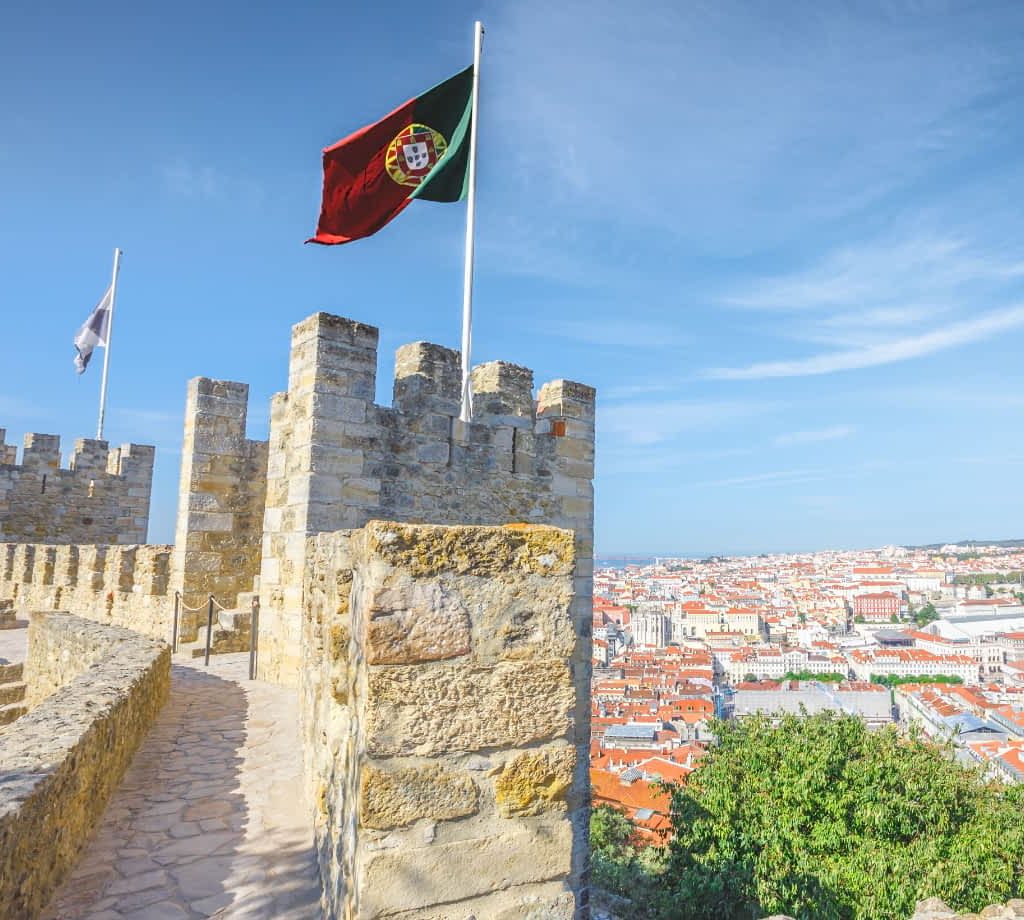
Kick off from São Jorge Castle at the top of the hill. Adult entry costs around €15, and it’s open daily from 9am (closing at 9pm March to October, 6pm November to February).
The castle itself is more of a fortified ruin than an intact building, and I’ll be honest with you: the interior is less impressive than the exterior suggests. But the views from the ramparts are exceptional, taking in the whole of Lisbon and the Tagus in one sweep. Budget an hour here.
After you’re done with the castle, meander through the surrounding streets of the Castelo neighbourhood. It’s quieter than the castle itself, full of quaint houses and, if you’re lucky, you’ll spot the castle’s resident peacocks wandering the cobbles.
Stop 2: Miradouro de Santa Luzia & Portas do Sol
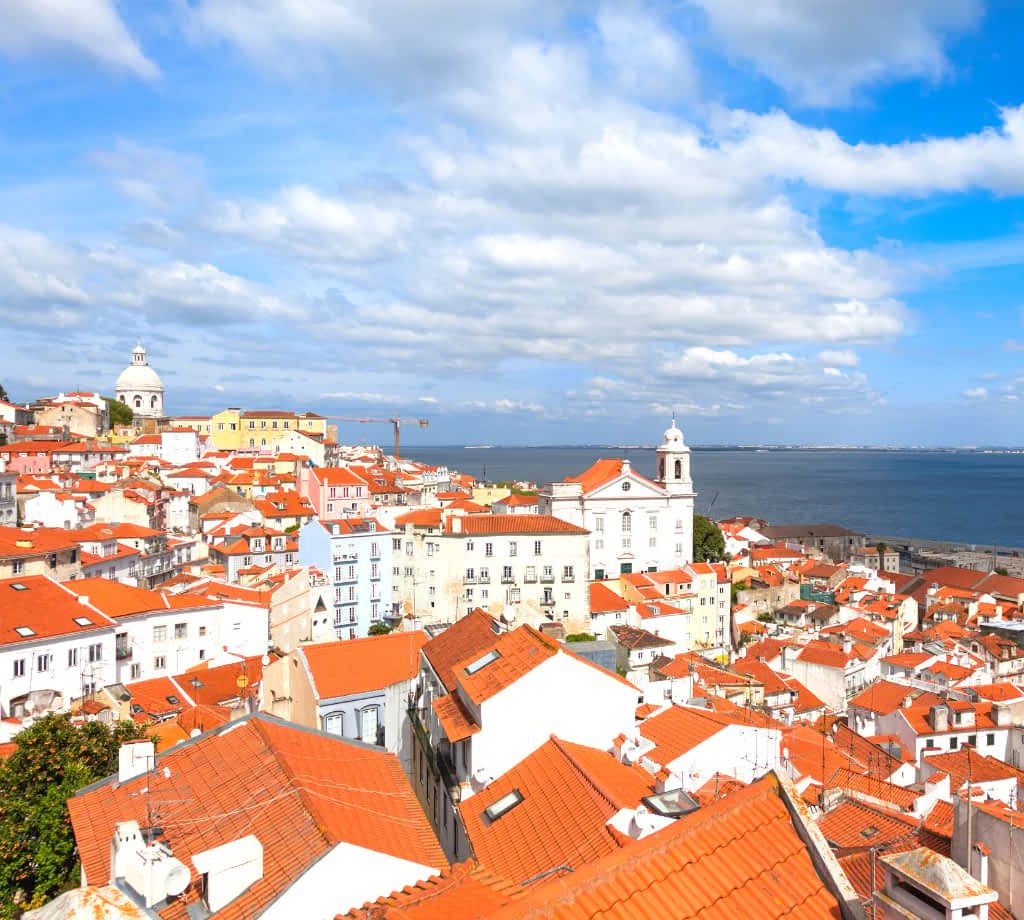
Work your way down the hill to the Miradouro de Santa Luzia, a small terrace garden with bougainvillea tumbling over the walls and a view straight down over the Alfama rooftops to the river. A couple of minutes further up the road is the Miradouro das Portas do Sol, more open and with a kiosk where you can stop for a coffee or a drink.
Stop 3: The Streets of Alfama
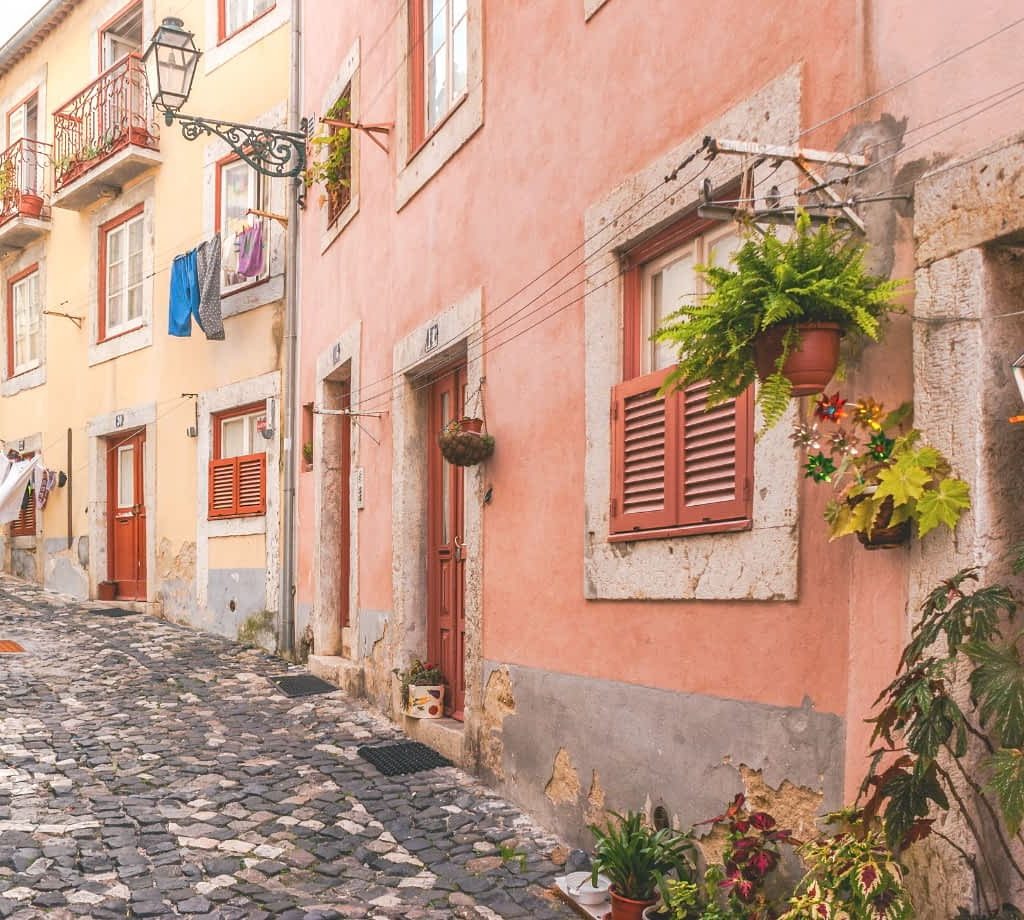
Now for the part that no itinerary can fully plan for you: getting a little lost in Alfama. The alleyways between the castle and the Sé Cathedral are full of street art, quirky buildings, and the kind of accidental beauty that Lisbon does better than almost anywhere. Give yourself time to wander and get lost here to fully soak in the atmosphere of Alfama.
Stop 4: Lunch in Alfama
Lunch stop: For lunch, the square near the Fado Museum has a handful of options with tables outside. But if you don’t mind walking a few minutes further, head to Taberna Sal Grosso, one of Alfama’s most celebrated spots.
A tiny 27-seat tavern serving honest, traditional Portuguese food with a contemporary touch, think pork belly with orange salad, octopus with sweet potato, beef cheeks that melt on the fork. The menu changes regularly and everything is designed to share. It’s deservedly one of the most talked-about restaurants in the neighbourhood, so booking ahead is essential. Don’t show up without a reservation and expect to get in.
Stop 5: Museu do Fado
After lunch, visit the Museu do Fado (Fado Museum), right on the square. Entry costs €5, which includes a free audio guide, and it’s open Tuesday to Sunday from 10am to 6pm.
Fado is Portugal’s most singular contribution to world music: deeply melancholic, built on themes of longing and fate and the sea. Even if you’ve never heard it before, the museum does a good job of explaining why it matters and letting you listen properly. A visit here will make the Fado dinner later tonight more meaningful.
Stop 6: Sé Cathedral
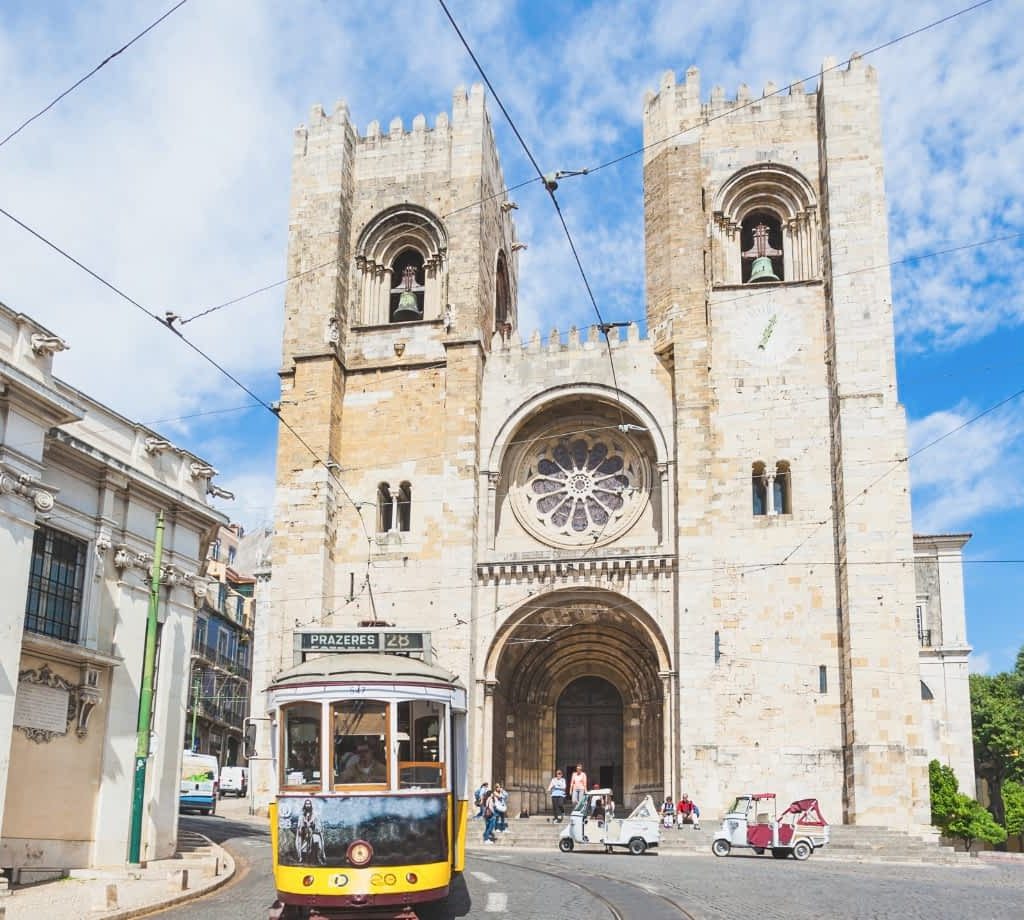
A short walk up from the museum brings you to the Sé Cathedral, Lisbon’s oldest church, construction that began in 1147. The exterior is a solid Romanesque fortress of a building. Inside you’ll find Gothic cloisters, baroque chapels and the kind of layered history that comes from a building that has survived an earthquake, multiple renovations and 900 years of continuous use.
Entry to the main nave is free if you just want to soak up the atmosphere, but a full ticket at €5 gets you access to the cloisters, treasury and the high choir with its views back over the nave. Worth it if you have the time.
Evening: Fado & Dinner
Book a Fado show for this evening before dinner. An intimate 50-minute performance in Alfama, with a glass of port or moscatel included, is the perfect way to experience Portugal’s most singular musical tradition without committing to a long set menu. Afterwards, head to one of the restaurants in the neighbourhood for dinner. You’ll listen differently to the music drifting out of doorways on your walk back.
💡 Insider Tip
Lisbon has no shortage of Fado dinner experiences, and some of them are genuinely special. But a word of warning: several well-known venues charge upwards of €50 – 70 per person for a set menu and Fado show, and the food doesn’t always justify the price. The music can be exceptional while the meal is an afterthought. Always check recent reviews carefully before booking, paying particular attention to what people say about the food quality and portion sizes, not just the atmosphere. Your best bet is often to separate the two: eat well somewhere you’ve chosen yourself, then book a dedicated Fado show.
🎶 My Recommendation: Fado Show with Portuguese Wine — Alfama
Before dinner, experience one of Lisbon’s most intimate Fado performances, set inside medieval stone walls in the heart of Alfama. This 50-minute show features talented male and female singers accompanied by traditional Portuguese guitar, with a glass of port or moscatel included. It’s a focused, authentic introduction to Fado without the distraction of a set menu. Book ahead as it sells out regularly.
Day 3: Belém
Spend day three in Belém, the riverside neighbourhood about 6km west of the city centre that holds most of Lisbon’s most iconic monuments. Take the tram 15E from Praça da Figueira or the train from Cais do Sodré (Cascais line, get off at Belém station). The journey takes around 20-25 minutes.
Note: the Torre de Belém is currently closed for renovation and is expected to reopen in May 2026. Check before you go. Even if it’s still closed, the exterior is worth seeing from the riverside walk.
Stop 1: Torre de Belém

Start at the Torre de Belém, the 16th-century tower that has become one of the most photographed images in Portugal. It juts out into the Tagus on a small promontory, all ornate Manueline stonework and corner turrets. The exterior is the main event. The interior is rather sparse, and my honest recommendation is to admire it from the riverside path and move on.
When it reopens, entry is €8 for adults, open Tuesday to Sunday.
Stop 2: Padrão dos Descobrimentos

Walk along the river to the Monument to the Discoveries (Padrão dos Descobrimentos), a soaring concrete monument in the shape of a caravel’s prow, with 33 figures from Portugal’s age of exploration gathered along its sides. Vasco da Gama leads at the front. The stone compass rose laid into the ground in front of it is one of those pieces of public art that rewards proper attention.
Stop 3: Jerónimos Monastery & Igreja de Santa Maria

Cross under the road to the Jerónimos Monastery, one of the finest examples of Manueline architecture anywhere in the world and a UNESCO World Heritage Site. Full monastery entry costs €18 for adults. Hours are 10am to 5:30pm October to April, and 10am to 6:30pm May to September. It’s closed Mondays.
If you’d prefer to keep costs down, the Igreja de Santa Maria de Belém (the church within the monastery complex) is free to enter and is, in my view, the most spectacular part of the whole complex. The single nave, the six sculpted columns, the tomb of Vasco da Gama. You simply have to go in.
💡 Insider Tip
Queues for the monastery can be very long in peak season. Book tickets online in advance, or consider arriving right when it opens. The Lisbon Card includes entry and is worth considering if you’re visiting multiple paid attractions.
Stop 4: Pastéis de Belém

By now you’ve earned a proper break. As you walk along Rua de Belém towards the bakery, you’ll pass the distinctive salmon-pink facade of the Palácio de Belém, Portugal’s official presidential residence since 1910. It’s easy to miss if you’re not looking for it, but worth a glance.
A little further along, you’ll reach Pastéis de Belém, the bakery that has been making the original custard tart recipe since 1837. The recipe was passed down from monks in the nearby monastery and is still a closely guarded secret. Order at least two. Eat them warm, with cinnamon and icing sugar. This is not a time for restraint.
Lunch stop: Grab lunch in Belém. There are several good options along Rua de Belém and the streets behind the monastery.
Stop 5: National Coach Museum
After lunch, the Museu Nacional dos Coches (National Coach Museum) houses an extraordinary collection of royal coaches and carriages from the 17th to 19th centuries. It’s not the most famous attraction in Belém but it’s genuinely impressive, particularly the ceremonial coaches sent by the Portuguese crown to the Pope.
Stop 6: MAAT
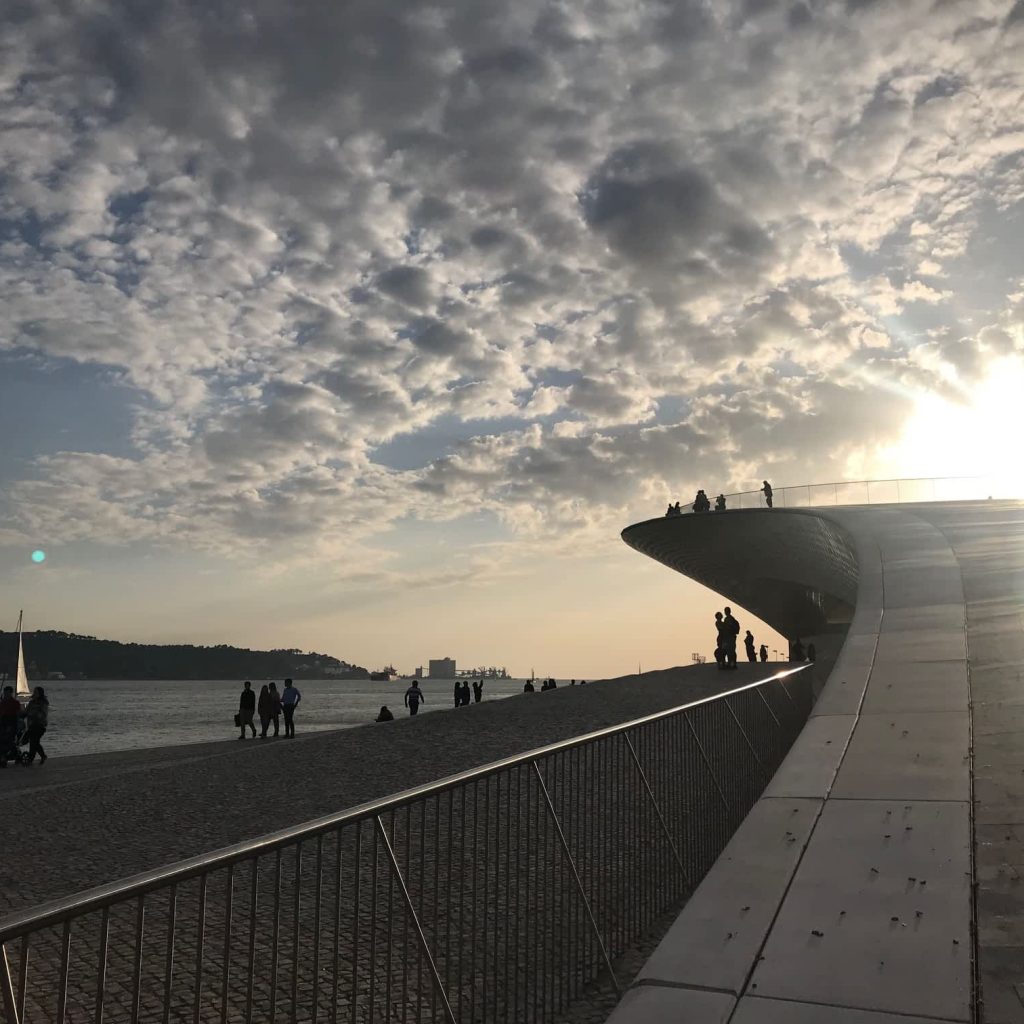
If contemporary art interests you, the MAAT (Museum of Art, Architecture and Technology) is worth an hour. The building itself is the showstopper, a low-slung ceramic-tiled structure that curves along the riverfront. The changing exhibitions tend to be thoughtful and well-curated. Don’t miss looping around the outside and heading up onto the roof, where you get a lovely uninterrupted view out over the Tagus. It’s free to walk up even if you don’t go inside.
Stop 7: LX Factory

End the day at LX Factory, a repurposed 19th-century industrial complex in the Alcântara neighbourhood, a short taxi or Uber from Belém. The warehouses have been converted into independent restaurants, bookshops, design studios, and bars. The Sunday market is the best version of it, but any evening has a good atmosphere.
Dinner recommendation: Grab dinner at one of the restaurants inside LX Factory. The vibe in the evening is relaxed and the options are varied.
🌊 Day 3 Alternative: Belém & Cascais
If a full day of monuments doesn’t appeal, consider a half-day in Belém to tick off the highlights, then continue on the same train line to Cascais. The coastal town is under an hour from Cais do Sodré and sits at the end of what locals call the Portuguese Riviera, a string of beaches and seaside villages running from Lisbon to the mouth of the Tagus.
Cascais itself has a charming historic centre, good seafood, and beaches within walking distance. It’s one of the most popular day trips from Lisbon for good reason.
Top Tours & Experiences in Lisbon
If you want to complement the itinerary with a guided experience, these are the ones I’d point you towards.
🎟️ Top Tours & Experiences in Lisbon
🎶 Fado Show with Portuguese Wine
An intimate 50-minute Fado performance inside medieval stone walls in Alfama, with a glass of port or moscatel included. A focused, authentic introduction to Portugal’s most singular musical tradition. Book ahead, it sells out regularly.
🛺 Private Tuk Tuk City Tour
Cover Lisbon’s highlights, hills and all, without the walking. Private tuk tuk tours with knowledgeable guides are a brilliant option for those who want to see a lot without the legwork. Hotel pickup included.
🏰 Day Trip to Sintra, Cabo da Roca & Cascais
The most popular day trip from Lisbon, and deservedly so. Sintra’s fairy-tale palaces, the dramatic cliffs of Cabo da Roca (the westernmost point of continental Europe), and the coastal charm of Cascais all in one day.
Day Trips from Lisbon

If your schedule allows a fourth day, or you want to plan extensions, Lisbon is exceptionally well positioned for day trips. Sintra is the obvious one, 40 minutes by train from Rossio. But there’s also the walled medieval town of Óbidos, the surfing beaches of Cascais and Estoril, and further afield, the university city of Évora. My full guide to day trips from Lisbon covers the best options with transport details.
Frequently Asked Questions: 3 Days in Lisbon
Is 3 days enough for Lisbon?
Three days gives you a solid overview of the city, covering the main neighbourhoods and monuments. You won’t see everything, but you’ll leave with a genuine sense of Lisbon rather than just a checklist of sights. If you can extend to four or five days, do it.
What is the best time of year to visit Lisbon?
May, June, and late September to October are the sweet spots. The weather is warm, the days are long, and the city is busy but not overwhelmed. July and August are very hot and very crowded. Winter is mild and often beautiful, though some attractions have reduced hours.
How do I get around Lisbon?
Walking is the best way to experience the city centre. The metro is clean and affordable for longer distances. Uber and Bolt are widely available, inexpensive, and particularly useful for tackling the hills. Note that as of 2026, all three of Lisbon’s historic funiculars and the Santa Justa Elevator are currently closed.
Is Lisbon expensive?
Lisbon is more affordable than most Western European capitals but prices have risen significantly in recent years. Budget around €50-80 per person per day for food and activities if you’re being careful. Accommodation varies widely by neighbourhood and season.
Where should I stay in Lisbon for 3 days?
Chiado, Baixa, and Príncipe Real are the best bases for a short trip. All three are central, walkable, and well connected. Alfama is atmospheric but steep. For a full breakdown, read my guide to where to stay in Lisbon.
Do I need to book Lisbon attractions in advance?
For São Jorge Castle and Jerónimos Monastery, yes, especially in summer. Queues at the ticket office can be long. The Rua Augusta Arch is less busy and you can usually buy on the spot. A Fado dinner should always be booked ahead.
Before You Go
Make sure you’re packed and prepared. My Portugal packing list covers everything you’ll need, including the one thing nobody mentions until it’s too late: proper walking shoes with grip. Lisbon’s cobblestones are beautiful and merciless in equal measure.


