
Ultimate 2 Days in Barcelona Itinerary

Two days in Barcelona sounds tight, and honestly, it is. This is a city that could easily fill a week. But here’s the thing, with a little planning and a route that actually makes geographic sense, you can experience the best of it without spending half your time on the metro or doubling back across town.
I put this itinerary together based on my own experiences from my visits to Barcelona. Day one takes you through the atmospheric old city and along the waterfront. Day two heads north for Gaudi’s masterpieces before winding back through Eixample for evening drinks and dinner. Every stop connects to the next, so your days feel full but never frantic.
I’ve also included where I stayed, where I ate (including a few places I’m still thinking about), and the small transport details that make all the difference when you’re short on time.
Disclaimer: This post contains affiliate links. If you book through these links, I may earn a small commission at no extra cost to you. This helps support Travel Boo and allows me to keep creating free content. All recommendations are based on my own experience.
Before You Go: The Essentials
Before diving into the day-by-day itinerary, here are the practical details that’ll save you time and stress, especially on a short trip where every hour counts.
Getting to and Around Barcelona

Most visitors fly into Barcelona El Prat Airport. The fastest way into the city centre is the Aerobus, which drops you at Plaça Catalunya in about 35 minutes and costs around €7.45 one way. Skip the metro from the airport. I made that mistake on my first visit and it took close to an hour with connections. The Aerobus is quicker, easier, and worth the small extra cost.
Once you’re in the city, Barcelona is incredibly walkable. Almost everything on this itinerary is reachable on foot, and half the charm is what you discover between stops. For longer stretches, the metro is efficient and easy to use. Pick up a T-Casual card (around €12.55 for 10 journeys) which works on the metro, buses, and trams within Zone 1. Note that you’ll need to load it onto a T-mobilitat card (€1 from vending machines), and it doesn’t work on the Aerobus.
I’ve covered transport in more detail in my Barcelona tips for first-time visitors, including the NitBus for late arrivals and early departures.
Where to Stay
For a two-day trip, I’d base yourself in Eixample. It’s central, walkable to most major sights, well connected by metro, and home to some of Barcelona’s best restaurants and bars. It’s also close to Gràcia, my favourite neighbourhood in the city, which is just 10 to 15 minutes on foot.
On my last visit I stayed at Casa Gracia, right on the border of Eixample and Gràcia. It’s a budget-friendly option that offers both hostel-style and private rooms. I went with a private room, and the bed was comfortable, the space was generous with high ceilings and a large bathroom, and the location was ideal. It’s not a luxury hotel, but for the price and the position, it’s solid value.
If you’re after something a little more polished, Praktik Garden is a well-reviewed boutique hotel in the heart of Eixample with a beautiful garden terrace that’s a welcome escape after a full day of sightseeing. The rooms are on the smaller side, but the location near Passeig de Gràcia and the charming design make it a great mid-range pick.
For a step up again, Hotel Casa Bonay & Spa is a design-forward boutique hotel on the edge of Eixample and El Born. It has twin rooftop areas, a local neighbourhood feel, and stylish rooms with real personality. It’s well placed for both Gaudi sights and the old city, with the Tetuan metro right on the doorstep.
Book These in Advance
This is the single most important practical tip for a two-day visit. Both the Sagrada Familia and Park Güell require timed-entry tickets, and they sell out. If you show up without a booking, you’re not getting in, and on a tight itinerary, that’s a day-ruiner.
For the Sagrada Familia, book at least two to three weeks ahead, especially in high season. Standard entry with the audioguide starts at €26, or €36 with tower access. For Park Güell, a few days ahead is usually enough, but don’t leave it to the morning of. General admission to the Monumental Zone is around €18, but check the official Park Güell website for current prices.
Personal Recommendation: Sagrada Familia Guided Tour
If you’re only seeing the Sagrada Familia once, a guided tour is worth it. I booked one on my visit and it made a real difference. Our guide, Raúl, broke down the symbolism behind the facades, explained how the interior was designed to mimic a forest canopy, and took us through the museum, which most people walk straight past. On a two-day trip especially, having someone bring it all to life in an hour saves you time and gives you a much deeper understanding of what you’re looking at. You could do it solo with the audioguide, but I’m glad I didn’t.
Day One: The Old City and the Waterfront
Day one covers Barcelona’s historic heart. Everything is clustered together and walkable, so you’ll spend more time exploring than commuting, saving you a ton of time. Start in the centre and work your way south and east towards the sea.
Morning: Plaça de Catalunya and La Rambla

Start your day at Plaça de Catalunya, the large central square where Barcelona’s old city meets the modern grid of Eixample. If you took the Aerobus from the airport, this is where it drops you, so it’s a natural starting point. It’s not the most beautiful square in the city, but it’s a useful landmark and meeting point.
From here, walk south down La Rambla, Barcelona’s famous tree-lined boulevard. It stretches about 1.2 kilometres from the square to the waterfront. It’s touristy, yes, but it’s still worth walking at least once. Keep your hand on your belongings (pickpockets are active here) and enjoy the atmosphere. Whether this is your first time visiting Barcelona or you’ve travelled here before, there’s always something to take in.
About halfway down, you’ll pass La Boqueria, Barcelona’s famous food market. It’s worth a quick stop, but a word of warning: the stalls at the front are tourist-oriented and overpriced. Walk deeper inside to find the real market. The fresh fruit juices are great, and if you spot a bomba (a stuffed potato ball with spicy sauce and aioli), grab one. It’s one of Barcelona’s most iconic street bites and a friend insisted I try one here. It didn’t disappoint.
💡 Insider Tip
Visit La Boqueria before 10am if you can. By midday it’s packed with tour groups and barely any room to move.
If You Want to Go Deeper: Barcelona Food Tour
If food is a big part of your trip (and in Barcelona, it should be), a guided food tour through the old city is a great way to spend your first morning. You’ll cover La Boqueria, the Gothic Quarter, and some of the local spots you’d never find on your own, with tastings along the way. It pairs perfectly with this itinerary since you’ll already be in the area.
Late Morning: The Gothic Quarter

Step off La Rambla and into the Gothic Quarter (Barri Gòtic), and the energy shifts completely. The narrow medieval streets, hidden plazas, and centuries-old buildings make this one of the most atmospheric neighbourhoods in the city. It’s no surprise that exploring architecture like this is considered one of the best things to do in Spain.
The Cathedral of the Holy Cross and Saint Eulalia is the centrepiece. Go early if you can, by mid-morning the main streets are packed with tour groups, but at 8am it feels like a different place entirely. The light filtering through the narrow lanes is beautiful – perfect if you’re an avid photographer wanting to capture the essence of the Gothic Quarter without the throngs of tourists.
💡 Insider Tip
Don’t miss the cathedral’s cloister, where 13 white geese have lived for centuries. It’s one of those unexpected details that makes Barcelona so charming. Entry to the cloister is free
The Gothic Quarter is also a great area for an evening out later in your trip. Portal de l’Àngel is a wide pedestrian street with a mix of shops and eateries, and there’s a good concentration of bars and restaurants tucked into the side streets. If you’re looking for things to do in Barcelona at night, this neighbourhood comes alive after dark.
Early Afternoon: El Born and the Picasso Museum
From the Gothic Quarter, walk east into El Born. It’s a natural continuation, just across Via Laietana, and has a slightly different feel. Trendier, younger, with independent boutiques, excellent coffee shops, and the beautiful Santa Maria del Mar basilica.
The Picasso Museum is here, housed across five medieval palaces on Carrer de Montcada. The collection is arranged chronologically, so you can trace how Picasso’s work evolved through different periods of his life. It’s well curated and worth an hour or two. Book tickets in advance online as it gets busy.
If you’re travelling solo in Barcelona, El Born is a great neighbourhood for it. The cafes and bars are relaxed, the streets are interesting to wander, and it never feels overwhelming.
Afternoon: Barceloneta and the Waterfront

From El Born, it’s a short walk south-east to Barceloneta, Barcelona’s old fishing quarter and home to the city’s most popular stretch of beach. After a morning of narrow streets and museums, the wide-open waterfront is a welcome change of pace.
Grab a seat at one of the beach bars, take a walk along the promenade, or just sit on the sand and watch the city from a different angle. It’s the kind of afternoon that doesn’t need a plan.
Don’t expect a secluded beach, Barceloneta is busy, especially in summer. But it’s got a great energy and it’s a quintessential part of the Barcelona experience.
Evening: Tapas and Drinks in the Old City
Head back towards the Gothic Quarter or El Born for dinner. This part of the city is full of excellent tapas bars and atmospheric spots to eat.
Bodega Biarritz 1881 is a well-loved tapas bar tucked into the side streets of the Gothic Quarter. It’s tiny, cosy, and known for generous portions at honest prices. They do a surprise tasting menu that’s popular with visitors and locals alike. No reservations, so expect a short wait, but the food is worth it. Open from 5pm most days, closed Tuesdays.
For drinks, head to El Xampanyet in El Born, a family-run tapas bar since the 1930s that’s famous for its house-made cava. Order a glass and some anchovies and soak up the atmosphere. It’s the kind of place that makes you feel like you’ve found the real Barcelona.
💡 Insider Tip
Order cava instead of sangria. Cava is Catalonia’s own sparkling wine, made using the same method as champagne but with local grape varieties. It’s what the locals drink, and it pairs perfectly with tapas.
Day Two: Gaudi, Eixample, and the Views
Day two takes you to Barcelona’s most iconic sights. The route heads north to Park Güell first thing, then south through the Sagrada Familia and down Passeig de Gràcia, finishing with rooftop drinks and dinner in Eixample. It’s a bigger day geographically, but the metro fills the gaps and everything flows in sequence.
Early Morning: Park Güell

Start early. Park Güell is one of Barcelona’s must-sees, but it gets crowded fast, and there’s very little shade. An early timed-entry slot means fewer people and cooler temperatures, both of which make a big difference. If there is one thing Barcelona is known for, it is for Antoni Gaudi’s legacy and Park Güell is one of his most playful creations.
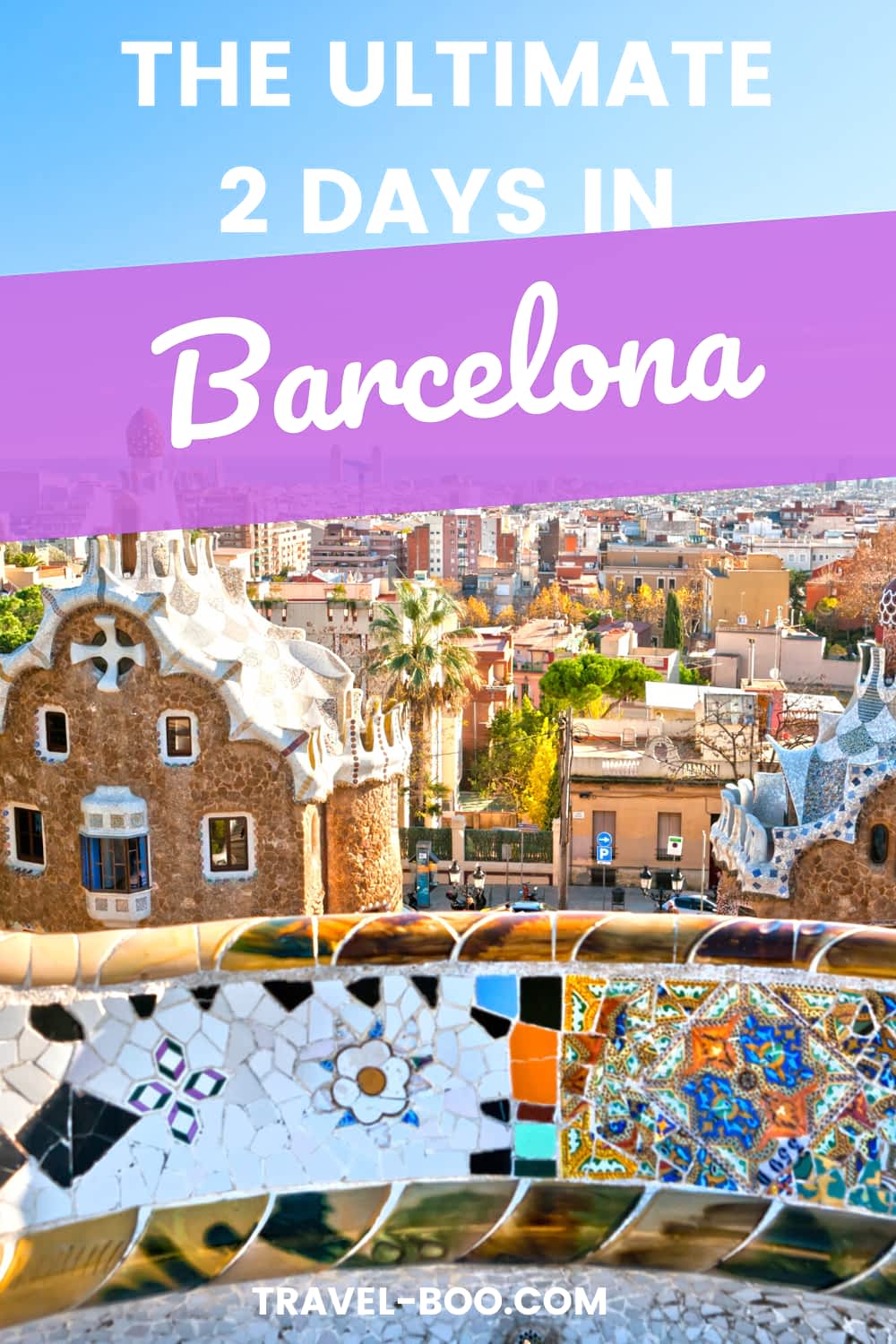
The Monumental Zone is where all the famous Gaudi mosaics are, including the serpentine bench with its panoramic views and the mosaic-covered dragon stairway. The rest of the park is free and offers some of the best views over the city.
Allow at least two hours. Wear comfortable shoes, bring water, and don’t skip the walk up to Turó de les Tres Creus, the highest point of the park, for a panoramic view that’s worth the climb.
Getting there: take the metro to Lesseps or Vallcarca (Line 3), or bus 117 which drops you right at the entrance. Don’t try to walk it uphill in summer unless you enjoy suffering. I’ve done it in winter and the struggle was real.
Late Morning: The Sagrada Familia

From Park Güell, take the metro south to the Sagrada Familia (Lesseps to Sagrada Familia on Line 4 via Passeig de Gràcia, or walk about 30 minutes). This is the one sight in Barcelona that lives up to every bit of hype. Gaudi designed it to feel like stepping into a forest, and once you’re inside, you’ll understand why. The columns branch upward like trees, and the stained glass casts colour across every surface.
My tip: try to time your visit for the afternoon if your schedule allows it. The western-facing stained glass windows catch the light later in the day and the whole interior fills with warm reds, oranges, and golds. I visited on a cloudy day and the effect was still striking, but on a sunny afternoon it’s genuinely breathtaking. If you’re following this itinerary and arriving late morning, you’ll still get beautiful light, but if you can flex the order of your day, afternoon is the sweet spot.
The Sagrada Familia is expected to complete its central Jesus Tower in 2026, which will make it the tallest church in the world. If you’re visiting soon, you’re seeing it at a truly historic moment.
Book a Guided Tour of the Sagrada Familia
I booked a guided tour of the Sagrada Familia and it completely changed the visit. Our guide, Raúl, walked us through the symbolism behind the facades, the forest of columns, and the stained glass. Having someone bring the history and architecture to life in person made it so much more memorable than an audioguide alone.
Afternoon: Passeig de Gràcia and Gaudi’s Houses

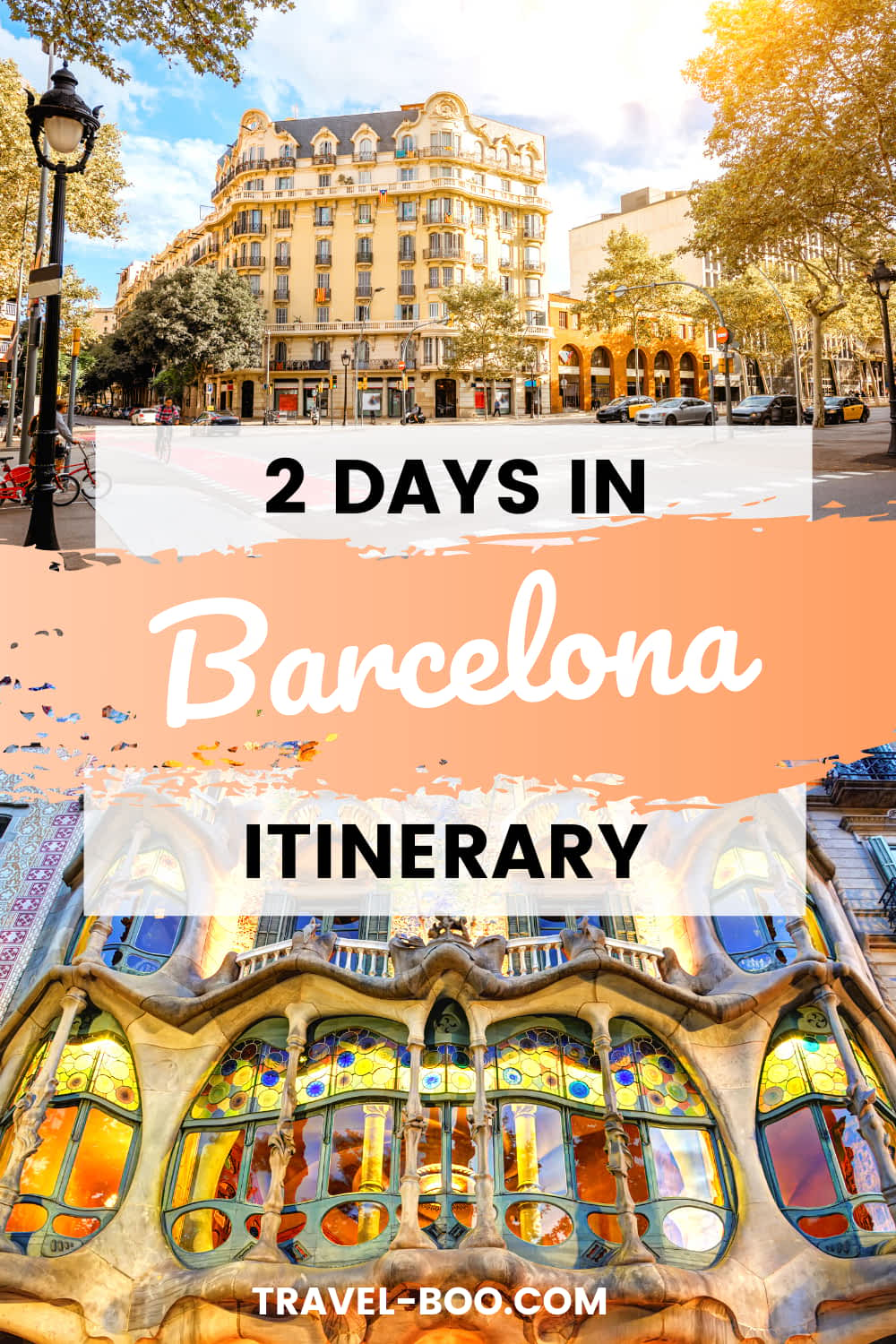
From the Sagrada Familia, you’ll head west towards Passeig de Gràcia, Barcelona’s grand boulevard and the heart of the Eixample district. Even if you don’t go inside any of the buildings, the walk alone is a highlight. Casa Batlló and Casa Milà (La Pedrera), two of Gaudi’s most famous works, sit right alongside other Modernist buildings. The contrast between Gaudi’s organic, flowing forms and the more classical buildings around them is fascinating.
If you only have time or budget for one, I’d suggest Casa Milà. The rooftop with its surreal chimney sculptures is iconic, and there’s an excellent museum inside dedicated to Gaudi’s work and methods. Self-guided tours of Casa Milà and tours of Casa Batlló are both available with skip-the-line access. You can walk between the two houses in under 10 minutes.
Even if you decide to skip going inside, it’s still worth walking past and admiring the facades. Don’t forget your camera, these buildings are incredibly photogenic.
Golden Hour: Rooftop Drinks
By late afternoon, you’ve no doubt earned yourself a drink from all the walking and exploring. Eixample is full of rooftop bars, and this is the perfect way to transition from sightseeing to evening.
Alaire Rooftop Bar (Hotel Condes de Barcelona, Passeig de Gràcia) is the one I’ve been to personally, and it’s a great spot. Stylish but relaxed, with views stretching across the Eixample rooftops all the way to the Sagrada Familia. I went for golden hour and it was perfect. It’s open to non-guests, but book ahead on weekends.
Terraza del Sercotel Rosellón (Eixample) is another excellent option if you want the closest rooftop view of the Sagrada Familia. It’s a small terrace so reservations are a must.
💡 Insider Tip
Barcelona doesn’t really get going until late. Dinner rarely starts before 9pm. Don’t rush from rooftop drinks to dinner. Enjoy the pace.
Dinner: My Personal Picks
You’re in Eixample, and this is where some of my favourite meals in Barcelona happened. Here are the places I’d happily send you to, knowing you’ll have an amazing dinner.
La Mini Pepita — This tiny tapas bar was recommended to me by a local, and it was one of the best meals of the trip. The space is small and it fills up fast, so go early or be prepared to wait. I was dining solo and grabbed a seat at the window table, watching the world go by. The buzz, the food, the wine, all amazing.
El Nacional — A stunning art deco space with multiple restaurants and bars under one roof. The atmosphere is beautiful without feeling pretentious. I ate at La Taperia inside and the food was excellent, especially the bomba, which was recommended to me by a friend who lives in Barcelona. Had to wash it down with a glass of cava, of course. I went early evening and it was busy but not chaotic. In high season, you may want to book ahead.
Cervecería La Barcelonesa — A fun find in Eixample. From the front it looks like a regular neighbourhood bar, but walk through and you’ll discover a hidden garden courtyard out back, complete with a beer fountain (yes, really!!). Great food, great atmosphere, and the kind of place where you sit down for one drink and end up staying all afternoon.
If You Have More Time
Two days covers the highlights, but if you can stretch your trip by even one more day, these are definitely worth considering.
Montserrat — About an hour northwest of Barcelona, this jagged mountain range with its centuries-old monastery is one of the best day trips in Catalonia. I’ve written about it in more detail in my Barcelona tips post, including how to get there, what to see, and how to time your visit.
Gràcia — My favourite neighbourhood in Barcelona. It feels like a small village that happens to be nestled inside a big city. The plazas are full of locals, the tapas bars are excellent, and there’s a creative, independent energy you won’t find in the more touristy areas. Plaça del Sol and Plaça de la Vila de Gràcia are both lovely spots to sit with a coffee, or grab a drink in the afternoon and just watch the neighbourhood go by.
Font Màgica — The Font Màgica de Montjuïc is a free light and water show at the foot of Montjuïc hill. It’s been running since 1929 and it’s a lovely way to spend an evening. Check the schedule before you go as show times vary by season.
And if you’re planning a longer Spain trip, you might enjoy my posts on hidden gems in Spain and the best road trips in Spain for more inspiration.
Also, don’t forget to check out my comprehensive packing list for your holiday to Spain to make sure you’ve got everything you need.
Frequently Asked Questions
Is 2 days enough for Barcelona?
Two days in Barcelona is enough to see the major highlights, including the Sagrada Familia, Park Güell, the Gothic Quarter, and the waterfront. You won’t see everything, but with a well-planned route you’ll get a real feel for the city. If you can stretch to three days, you’ll have time for Montserrat or a slower exploration of neighbourhoods like Gràcia.
What is the best area to stay in Barcelona for 2 days?
Eixample is the best base for a short visit. It’s central, well connected by metro, walkable to most major sights, and packed with excellent restaurants and bars. You’re close to both the old city and Gaudi’s architecture, which saves a lot of time when you’re only here for two days.
Do I need to book the Sagrada Familia in advance?
Yes, absolutely. The Sagrada Familia requires timed-entry tickets and they sell out, especially in high season. Book at least two to three weeks ahead. Standard entry starts at €26, or €36 with tower access. Do not leave this to the day of, you will not get in.
Should I get the Aerobus or metro from Barcelona Airport?
The Aerobus. It runs every 5 to 10 minutes, takes about 35 minutes to Plaça Catalunya, and costs €7.45 one way. The metro is cheaper but takes significantly longer with connections. After a flight, the Aerobus is faster, easier, and worth the small extra cost.
Is Barcelona walkable?
Very. Most of the sights on this itinerary are within walking distance of each other, especially on Day One where the old city, El Born, and Barceloneta are all connected. Day Two covers more ground, so you’ll use the metro for Park Güell and the Sagrada Familia, but Passeig de Gràcia and Eixample are easily explored on foot.
What should I eat in Barcelona?
Start with pa amb tomàquet (bread with tomato and olive oil), try the bomba (a stuffed potato ball), and finish with crema catalana. Order cava instead of sangria. For more detail, see the food section of my Barcelona tips post, which covers Catalan dishes, where I ate, and bars worth visiting.
I’ve been to Barcelona many times and this is a great 2-day Itinerary!