
What to Eat in Lisbon: A Local Food Guide to Dishes You Should Try
One of my first memories of Lisbon is, unsurprisingly, about food.
Before I lived here, I visited Lisbon with my partner and my cousin picked us up from the airport. One of the first places he took us was Time Out Market at Cais do Sodré. I remember ordering croquetes and a bacalhau burger, and that burger in particular was insanely good.
It was a pretty memorable introduction to Lisbon.
Since I’ve now lived in Portugal for close to a decade, I’ve had a lot more time to explore Lisbon’s food scene, from traditional tascas and seafood restaurants to Moroccan, Middle Eastern, African and Peruvian food, tiny wine bars and some excellent restaurants that don’t fit neatly into any one category.
But if it’s your first visit, Portuguese food is still where I’d start.
Lisbon is a fantastic city for eating, and you don’t need to spend a fortune or chase Michelin stars to experience it. Some of the most memorable things you can eat here are remarkably simple: grilled fish, a bifana in a bread roll, clams cooked with garlic and coriander, or a warm pastel de nata dusted with cinnamon and icing sugar.
So, if you’re wondering what to eat in Lisbon, these are the Portuguese dishes, snacks and food experiences I’d put on your list.
This post contains affiliate links. If you book through these links, I may earn a small commission at no extra cost to you. This helps support Travel-Boo and allows me to keep creating free content. All recommendations and personal opinions are based on my own experience unless otherwise stated.
What food is Lisbon (and Portugal) famous for?
If you only have a few days in Lisbon, there are a handful of things I’d particularly recommend trying:
- Pastéis de nata
- Bacalhau à Brás
- Grilled sardines, especially in summer
- Bifanas
- Croquetes and pastéis de bacalhau
- Fresh fish and seafood
- Amêijoas à Bulhão Pato
- Arroz de marisco
- Petiscos in a traditional tasca
- Ginjinha
Not everything on this list originated in Lisbon. Portuguese regional food travels well, and restaurants in the capital serve dishes from all over the country. At the same time, there are foods with particularly strong connections to Lisbon, including bacalhau à Brás, grilled sardines during the city’s summer festivities and, of course, the pastel de nata.
There are also less internationally famous Lisbon dishes worth looking out for. Meia-desfeita de bacalhau, for example, combines flaked salt cod with chickpeas, onion, parsley, olive oil and vinegar and is traditionally associated with Lisbon.
If you’re planning the rest of your trip around all this eating, my 3 days in Lisbon itinerary gives you a practical route through the city.
1. Pastéis de Nata

Let’s start with the obvious one.
A pastel de nata is a small Portuguese custard tart with crisp, flaky pastry and a rich custard filling, baked until the top develops those characteristic dark caramelised patches. You’ll see them everywhere in Lisbon, from neighbourhood pastelarias (pastry shops/cafés) to some of the city’s most famous bakeries.
The best-known stop is Pastéis de Belém, beside the Jerónimos Monastery. The history is genuinely interesting: after Portugal’s monasteries were closed in 1834 (during the dissolution of monasteries), someone from the monastery began selling the pastries through a nearby shop. Production of Pastéis de Belém began in 1837 using an old secret recipe from the monastery, and the bakery says that recipe remains known only to its master pastry chefs today.
It’s an institution and certainly worth trying if you’re curious, but personally I wouldn’t stand in a very long queue just to tick it off the list.
I much prefer Manteigaria. They have several locations around Lisbon, including Chiado, Time Out Market and Belém, and in my experience it’s normally much easier to grab a pastel de nata without a huge wait. Fábrica da Nata is another good option. I find theirs slightly sweeter, but they’re still very good.
Whichever you choose, try one warm and add a little cinnamon and icing sugar. Both are commonly offered alongside the pastries, and that combination is delicious.
2. Bacalhau à Brás
You can’t really talk about Portuguese food without talking about bacalhau.
One of the curious things about Portugal’s most famous fish is that cod isn’t actually caught off the Portuguese coast. The country’s relationship with bacalhau stretches back centuries: records of trade involving Portuguese salt and cod go back to the 14th century, and Portuguese fishermen later travelled to the cold North Atlantic waters around Newfoundland in search of it. Salting and drying made the fish practical to preserve and transport, and it became deeply embedded in Portuguese cooking.
You’ll often hear that Portugal has 1,000 ways to prepare bacalhau. Whether anyone has actually counted them is another matter, but it gives you an idea of how important it is here.
One preparation particularly associated with Lisbon is bacalhau à Brás: shredded salt cod mixed with thin fried potatoes, onion and egg, usually finished with parsley and black olives. It’s comforting, salty and much better than its fairly humble list of ingredients might suggest.
And bacalhau doesn’t have to be formal. That bacalhau burger I ate on my first trip to Lisbon certainly wasn’t a traditional dish, but it was a very good introduction to just how widely cod appears on Portuguese menus.
3. Sardinhas Assadas
If you’re in Lisbon in June, you’re going to notice sardines.
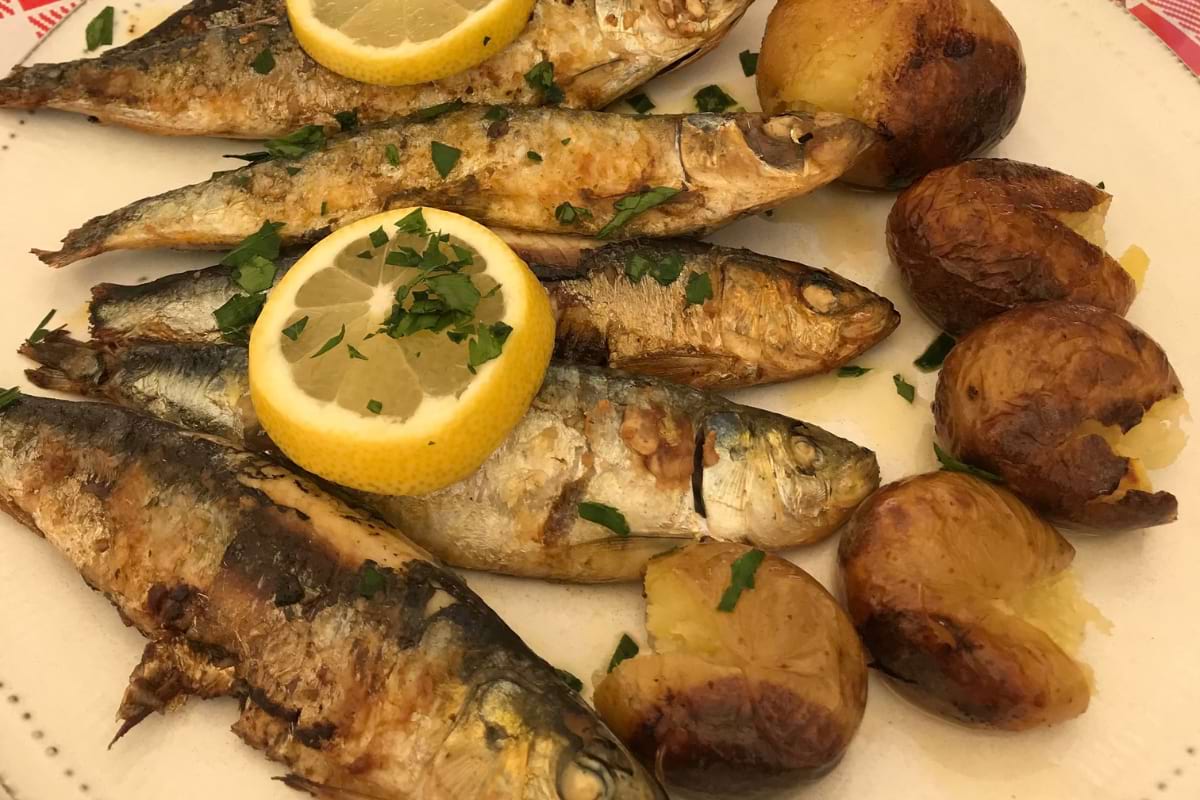
During the Festas de Lisboa, and particularly around the Santo António celebrations, the smell of sardines grilling over charcoal drifts through some of Lisbon’s oldest neighbourhoods. Sardinhas assadas are simply grilled sardines, normally served without much fuss, and that’s part of the appeal.
You’ll encounter sardines at other times too, but I’d particularly associate the full experience with early summer when they’re in season and Lisbon is celebrating in the streets. If your trip falls in June, this is one food experience I’d actively seek out.
4. Bifana
A bifana is one of Portugal’s great simple foods: thin slices of pork cooked in a seasoned sauce and stuffed into a bread roll, with mustard or piri-piri added according to taste.
There’s no elaborate presentation required. It’s inexpensive, filling and exactly the sort of thing that works when you’ve spent half the day walking Lisbon’s hills.
I’ve had the famous bifana from As Bifanas do Afonso on Rua da Madalena, a tiny counter that has been serving them for decades and is regularly touted as one of Lisbon’s best. It was very good indeed. (Although, I still maintain that my dad’s bifanas are the best I’ve ever had, though, so Afonso will have to settle for second place in my personal ranking.)
5. Croquetes and Pastéis de Bacalhau
Croquetes don’t always get the international attention that pastéis de nata or bacalhau receive, but they’re something I strongly associate with Portuguese cafés, tascas and snack counters.
Portuguese croquetes are typically made with a seasoned meat filling, crumbed and fried until crisp on the outside. They’re easy to order as a snack or as part of a selection of smaller dishes, and they also happen to be part of that very first Lisbon food memory I mentioned earlier.
You’ll also see pastéis de bacalhau, or codfish fritters, all over the city. One heavily marketed version is filled with cheese and is often sold with a small glass of wine. I’ve tried it and, personally, it wasn’t for me. The combination has quite a strong flavour and smell. When my brother visited with his family, his kids took one bite and the rest ended up in the bin.
Plenty of people clearly enjoy them, so tastes will differ, and there’s nothing wrong with trying one for yourself. But for the price, I’d personally choose a plate of good croquetes or a more traditional pastel de bacalhau instead.
6. Amêijoas à Bulhão Pato
If you like seafood, look for amêijoas à Bulhão Pato.
These clams are cooked in a simple combination typically involving olive oil, garlic and coriander, with plenty of flavourful juices left at the bottom of the dish. Order some bread because you’ll probably want it for dipping.
This is a good example of something I really enjoy about Portuguese food: when the ingredients are good, they often aren’t buried under complicated sauces or dozens of competing flavours.
7. Arroz de Marisco
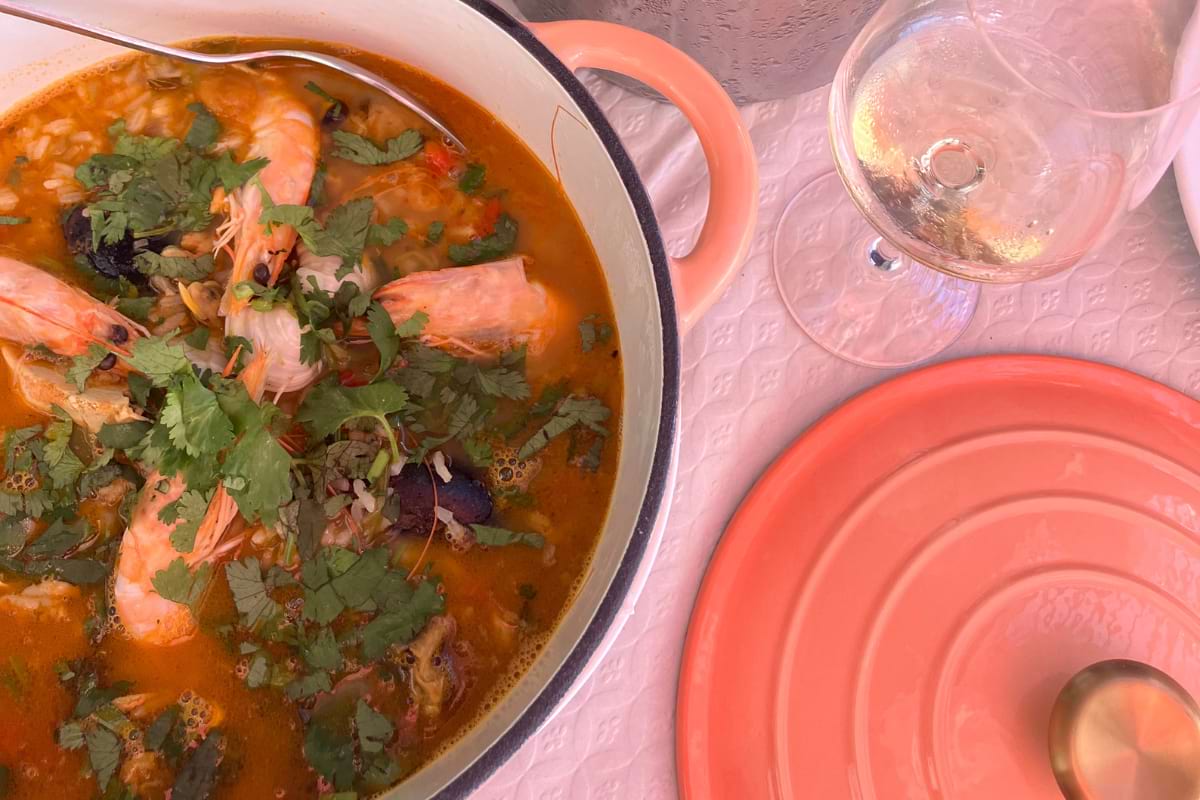
Another dish worth trying if you’re a seafood lover is arroz de marisco, Portuguese seafood rice.
Don’t expect something dry like paella. Portuguese seafood rice is generally much looser and brothier, with the rice soaking up a rich seafood stock.
I’ve had some fantastic seafood rice since living here, and seafood in general is one area where it’s worth looking beyond Lisbon’s historic centre.
💡 Insider Tip
Before ordering arroz de marisco, ask how many people the portion serves. It often arrives in a large pot designed for sharing rather than as an individual plate. Depending on the restaurant, one order can comfortably feed two people and sometimes more. You really don’t want four people enthusiastically ordering four giant pots before discovering this.
8. Fresh Fish and Seafood
Portugal’s relationship with the Atlantic is reflected all over its food. Depending on the restaurant and what’s available, you might encounter grilled dourada (sea bream), robalo (sea bass), polvo (octopus), prawns, clams, crab, percebes (goose barnacles) and all sorts of other seafood.
If you enjoy fish, don’t feel that you need to order something elaborate. A good piece of fresh fish grilled simply and served with olive oil, potatoes and vegetables can be one of the best meals you’ll have.
Now that I live closer to Estoril, I’ve had some excellent seafood along the coast. Bolina, on the seafront between Tamariz and Poça beaches, is one I’ve personally enjoyed, particularly when you want fresh seafood with a coastal setting – not fancy and no fuss but the food is delicious. If you’re heading that way, my Lisbon to Cascais guide covers the easy journey along this stretch of coast.
If seafood is a big part of your trip, I also have a separate guide to the best seafood restaurants in Lisbon. That article is the better place for a full restaurant list rather than trying to squeeze one into this food guide.
What about Cervejaria Ramiro?
Cervejaria Ramiro is probably the Lisbon seafood restaurant you’ll see recommended most often, and plenty of people genuinely love it.
I’ve only eaten there once, so take this purely as my own experience, but to be completely transparent, I didn’t particularly enjoy it. Between the very bright lighting, the busy queuing experience and the enormous amount of hype around the restaurant, I personally didn’t find the overall experience compelling enough to make me want to return.
That may also be partly down to perspective. I grew up in South Africa, where we have excellent fresh seafood, and I’ve since eaten at some fantastic seafood restaurants across Portugal. For me, calling Ramiro an essential seafood pilgrimage is a stretch.
That doesn’t mean you shouldn’t go. It’s famous for a reason and many people rave about it, so if you’re curious, try it and make up your own mind. I just wouldn’t tell you that you have to go to Ramiro to experience good seafood in Lisbon.
Seafood with a view across the Tagus
Another memorable seafood experience is just across the Tagus from Lisbon.
Take the ferry to Cacilhas and you can walk along the riverfront at Cais do Ginjal with Lisbon spread out across the water in front of you.
Ponto Final is the famous restaurant here, sitting right beside the river and serving traditional Portuguese food. It gets extremely busy, so this is somewhere I’d book rather than simply hoping for a table.
I’ve also eaten next door at Atira-te ao Rio. It’s a little more contemporary, with Portuguese and Mediterranean influences and a focus on fresh fish and seasonal ingredients, while still giving you that fantastic view back towards Lisbon.
Neither is what I’d call a cheap hidden gem, but the combination of the food, river and view makes this a pretty special setting for a meal.
9. Caracóis
Here’s one that divides visitors: snails.
Caracóis are small snails simmered in an aromatic broth, typically with ingredients such as garlic and oregano, and they’re very much a warm-weather social food. You’ll often see handwritten Há Caracóis signs appearing outside cafés and tascas when the season starts.
There’s even a Portuguese saying about when to eat them: the best months are the months without the letter R. In Portuguese that’s maio, junho, julho and agosto, or May through August.
They’re usually eaten slowly with a toothpick, accompanied by bread and a cold beer. If you’re squeamish, nobody is forcing you. But if you’re curious about the foods people actually gather around on Lisbon terraces in summer, they’re worth knowing about.
10. Caldo Verde
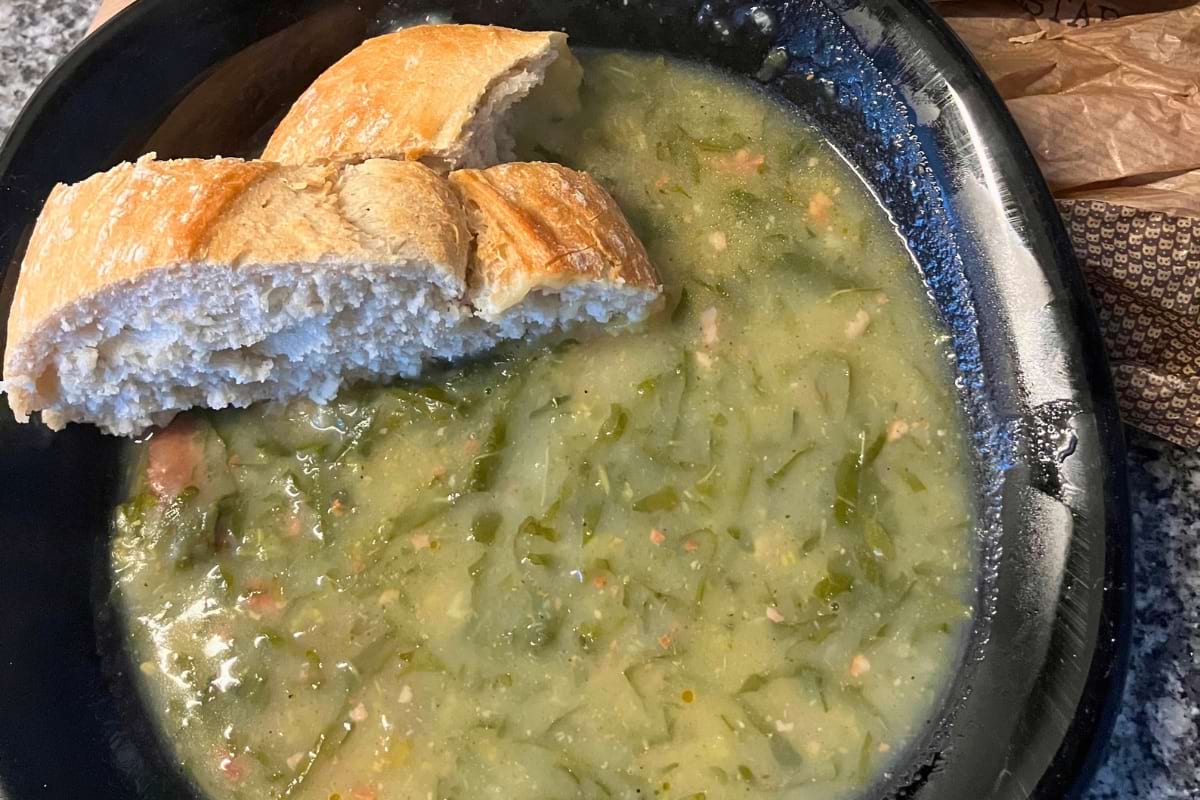
Caldo verde isn’t specifically a Lisbon dish, but you’ll encounter this Portuguese classic throughout the city and it certainly takes me back to my grandmothers cooking, with fond childhood memories.
It’s a comforting soup traditionally made with potato, finely shredded greens (kale) and olive oil, often served with slices of chouriço. It’s simple, inexpensive and particularly good when Lisbon isn’t delivering the sunny weather you were promised.
11. Chouriço and Portuguese Enchidos
Chouriço is another Portuguese staple you’re likely to encounter in Lisbon. You’ll see it incorporated into dishes as well as served on its own, sometimes brought to the table in a small flaming assador.
But chouriço is only one part of Portugal’s much broader world of enchidos (cured sausages). If you’re sharing petiscos, a selection of Portuguese cheeses and cured meats can be an easy way to try several things at once.
12. Queijo de Azeitão
Azeitão sits south of Lisbon, and its famous sheep’s milk cheese is well worth looking for while you’re in the region.
Queijo de Azeitão is soft, rich and creamy, with a distinctive flavour. A ripe one can be so soft that you cut the top and scoop the centre out onto bread rather than slicing it like a hard cheese.
Pair that with Portuguese wine and I’m a very happy snacker.
Don’t overlook Lisbon’s tascas and petiscos
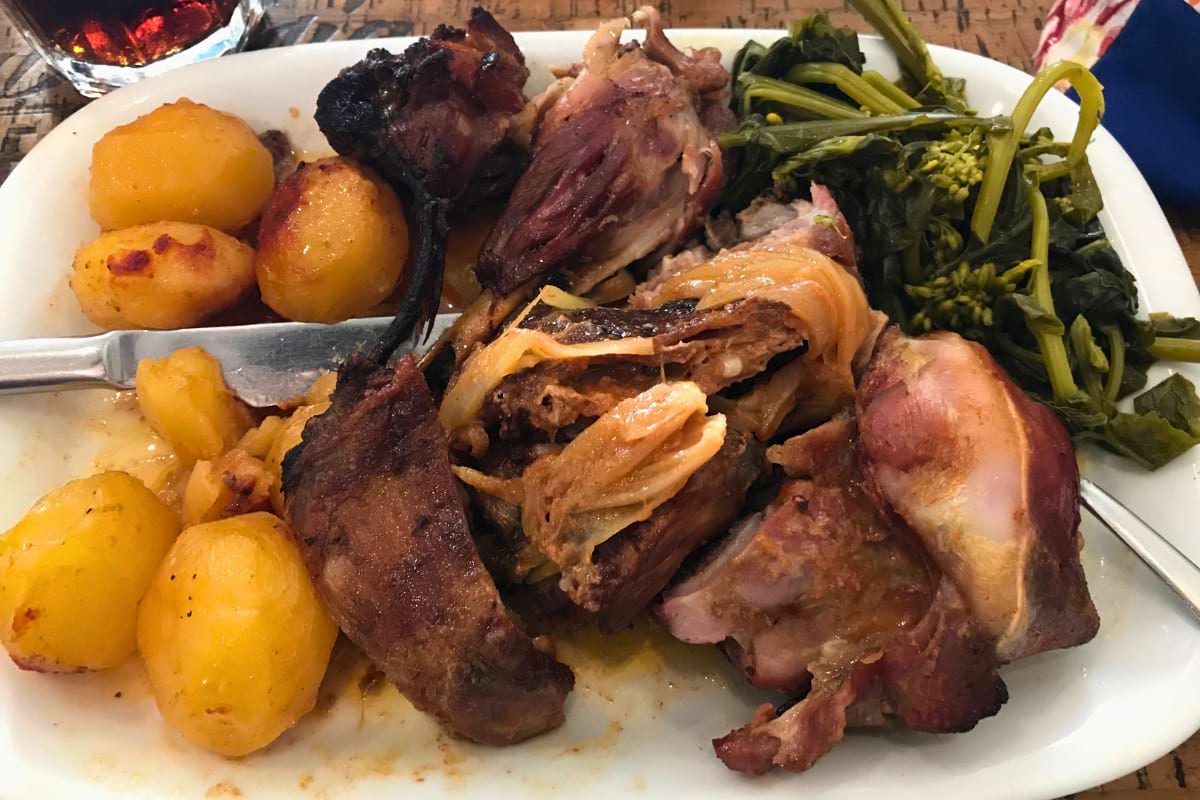
Knowing what to eat is only part of understanding Lisbon’s food scene. It’s also useful to know how people eat here.
A tasca is essentially an informal, traditional Portuguese eatery. Some are extremely basic, while others take the idea of tasca cooking and make it more contemporary.
Then there are petiscos, small Portuguese dishes that are ideal for sharing. They’re often compared with Spanish tapas because that helps explain the format, but petiscos are part of their own Portuguese eating tradition.
One place I’ve really enjoyed is Taberna Sal Grosso in Alfama, a small, informal spot built around Portuguese food and sharing plates. I’ve also eaten very well at Taberna da Esperança and Trinca.
Another completely different Lisbon experience is Restaurante Cabaças in Chiado. It’s a very unfussy tasca-style place where the memorable part is cooking your steak yourself on a hot stone at the table. It’s not somewhere you go for elaborate interiors. You go for the experience and the food.
These are the kinds of places that remind you that eating well in Lisbon doesn’t necessarily mean eating somewhere polished or expensive.
Time Out Market: touristy, yes. Still worth knowing about.
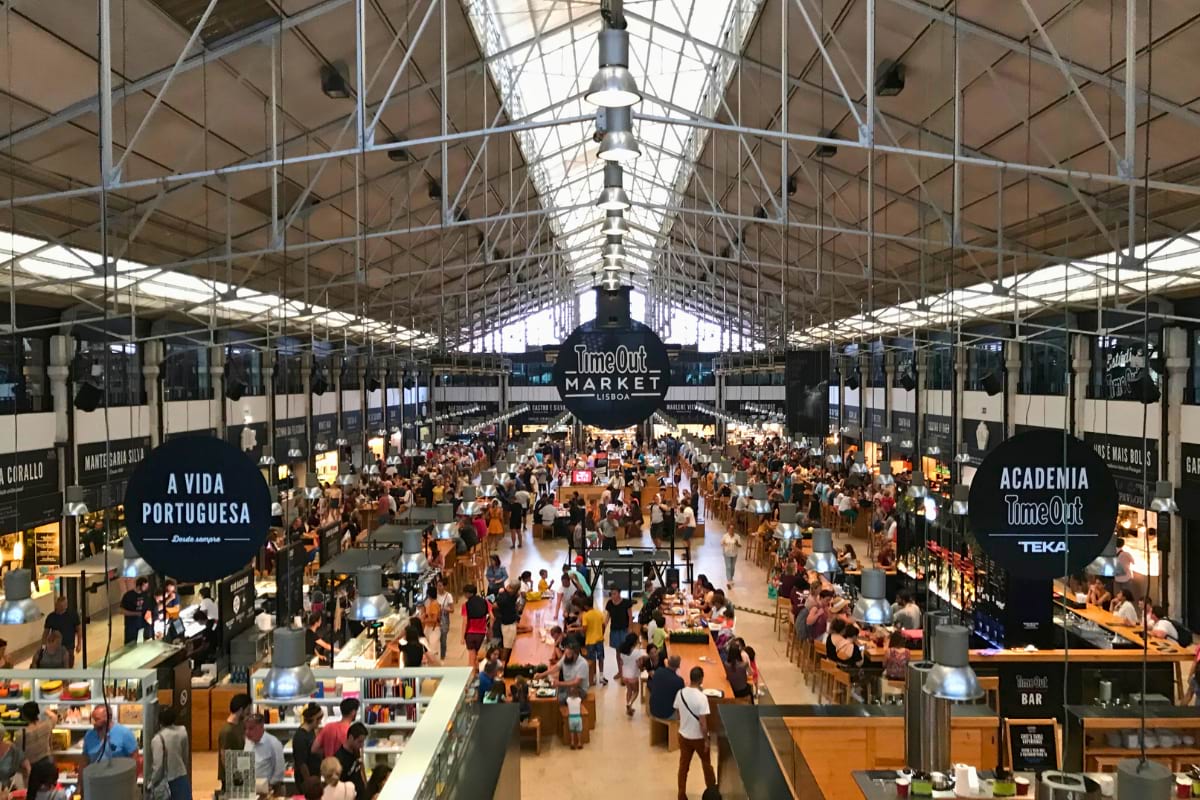
Time Out Market gets plenty of criticism for being busy and touristy. Both things can be true.
But I also wouldn’t write it off. It was one of my very first Lisbon food experiences, and I still remember that bacalhau burger and those croquetes from my first visit before living here.
The food hall occupies part of the historic Mercado da Ribeira in Cais do Sodré, with a large collection of restaurant counters and bars under one roof. The traditional market still exists alongside it, so it isn’t quite the same thing as Lisbon’s other municipal produce markets.
It’s lively, there are loads of choices, and it’s particularly useful if you’re travelling with people who all want something different. The downside is the crowds. It can become absolutely packed, so don’t go expecting an intimate Lisbon dining experience.
If you’re prepared for what it is, though, I still think it’s a fun stop. It’s also easy to work into a day of sightseeing around Cais do Sodré, Baixa and Chiado; my one day in Lisbon itinerary follows a route through this part of the city.
Lisbon’s traditional food markets
Time Out Market shouldn’t be confused with Lisbon’s more traditional municipal markets.
Places such as Mercado 31 de Janeiro, around Saldanha and Estefânia and only a short walk from where I used to live in Lisbon, are much more about buying fresh produce, fish, meat and other ingredients than wandering between dozens of ready-to-eat restaurant stalls.
They’re interesting if you’re curious about the ingredients behind Portuguese cooking, but I wouldn’t send a visitor there promising a Time Out-style food hall. If you want to understand what you’re seeing rather than simply browse the stalls, a guided market or food tour can make more sense.
Lisbon’s food scene goes far beyond Portuguese food
Here’s something that gets missed when Lisbon is reduced to sardines, bacalhau and custard tarts: you should absolutely eat Portuguese food while you’re here, but Lisbon has also become an incredibly diverse city for food.
That ranges from casual international restaurants and wine bars through to serious contemporary and Michelin-recognised dining. I’ve experienced that variety myself over the years.
One of my favourites is Flor da Laranja, a tiny Moroccan restaurant in Bairro Alto where the experience feels almost like being welcomed into someone’s home. The owner cooks and hosts, prepares the meals around the guests she’s expecting, and doesn’t operate as somewhere you casually walk into hoping for a table. Reserve in advance. Every person I’ve taken there has raved about the food.
I’ve also really enjoyed Farès near Cais do Sodré for Middle Eastern food and Mambo on Rua da Silva for African food. Rua da Silva is better known these days as Lisbon’s Green Street, a photogenic little street covered with plants and filled with cafés and restaurants. Mambo fits perfectly into that lively setting and the food I’ve had there has been excellent.
Qosqo, around the Baixa/Alfama side of the city, is another one I’ve enjoyed for Peruvian food, while Tati is a cool little wine-bar option around the Anjos area when you want to sit outside and share a bottle of wine.
And if you’re exploring Belém, one of my favourite casual options is Pita.gr FoodTruck Chef Thassos at Largo da Princesa in Restelo. It’s a small Greek food truck with a handful of tables, excellent gyros and other Greek dishes and desserts. It’s cash only, so arrive prepared.
The point isn’t that you should come to Lisbon and avoid Portuguese food in favour of Greek or Moroccan food. It’s that once you’ve had your fill of bacalhau and bifanas, you don’t need to spend the rest of the trip eating from the same traditional-food checklist. Lisbon’s modern food scene is much more interesting than that.
Vegetarian and vegan diners aren’t restricted to side salads either. I’ve eaten at The Green Affair, for example, and Lisbon now has a substantial plant-based restaurant scene. I cover that separately in my Lisbon vegan and vegetarian guide.
At the opposite end of the spectrum, Lisbon also has a serious fine-dining scene, with restaurants recognised across the Michelin Guide. There really is room here for everything from a tiny neighbourhood tasca to a multi-course tasting menu.
And then there are Bolas de Berlim on the beach…

This isn’t something I’d call a Lisbon dish, but it is one of those Portuguese food experiences that still makes me smile.
Go to the beach in summer and you may hear a vendor walking along the sand calling out while carrying a cooler full of bolas de Berlim.
They’re soft, round fried pastries rather than the ring-shaped doughnut many visitors might picture. The classic version is sliced through the middle and filled with a rich egg-yolk or pastry cream, although you’ll find other fillings too.
The beach sellers keep them chilled in coolers as they walk along the sand, which makes considerably more sense once you’re lying in the Portuguese summer heat. There’s something wonderfully unexpected about being on the beach and hearing someone approaching with a cooler full of bolas de Berlim.
If your Lisbon trip includes time along the Estoril-Cascais coast, keep an ear out. You can find more ideas on which beaches to visit in my guide to the best beaches around Lisbon.
What should you drink in Lisbon?
I’m deliberately keeping this short because Portuguese drinks deserve their own guide.
Ginjinha is one of the classics to try in Lisbon: a sweet cherry liqueur traditionally served in tiny glasses, with or without a cherry in the bottom. It’s strongly associated with Lisbon, although Óbidos has its own famous ginjinha tradition too, particularly the tourist-favourite version served in a little chocolate cup.
In summer, I also love a cold Vinho Verde. Despite the name meaning “green wine”, it refers to a young wine rather than its colour. Many of the whites are light, fresh and sometimes have a gentle spritz, which makes them especially refreshing with grilled fish or seafood.
With a good steak or richer meat dish, I’d usually move towards a Portuguese red. Some of my personal favourites come from the Dão and Beira regions.
That’s as far as I’ll take the drinks detour here. For wine, beer, liqueurs, coffee and what I’d actually recommend trying, read my full guide to the best Portuguese drinks.
Food tours and cooking experiences in Lisbon

If you’re only in Lisbon for a few days, a good food tour can be a useful way to understand what you’re eating rather than simply working through a checklist.
I’d lean towards an experience that combines several tastings with some explanation of Portuguese food culture and the neighbourhoods you’re walking through.
🍴 Lisbon Food Experiences Worth Considering
Lisbon Food & Culture Tour: A four-hour guided experience with multiple Portuguese tastings, petiscos, wine and stops around central Lisbon. Check current availability and prices.
Pastel de Nata Workshop: If you’d rather make something yourself, this hands-on workshop covers the pastry and custard from scratch with a chef. Check current availability and prices.
I’ve personally done a pastel de nata workshop in Lisbon and had a lot of fun with it. I can’t remember the exact pastelaria now, so I’m not going to pretend it was one of the workshops above, but the experience itself is something I’d happily recommend.
A few things to know before eating out in Lisbon
The bread and olives on the table may be a couvert
Restaurants may bring bread, olives, cheese or other small items to the table at the start of the meal. This is the couvert, and it’s normally charged if you consume it.
If you don’t want it, you can politely decline. I’ve done this plenty of times and it’s really no issue at all. Just check your bill afterwards to make sure anything you declined hasn’t accidentally been added.
Look for prato do dia and menu do dia at lunch
A prato do dia is the dish of the day and can be one of the best-value ways to eat a straightforward Portuguese lunch.
Also look for a menu do dia. Depending on the restaurant, this can bundle several things together for a surprisingly good price, such as soup, a main course and a drink, sometimes with coffee or dessert included too.
Don’t judge a restaurant entirely by its décor
Some very good traditional restaurants are extremely simple inside. Cabaças is a good example from my own experience. A polished dining room isn’t necessarily an indicator that you’ll eat better.
Book the hotspots
Lisbon is busy, particularly in peak travel periods, and the restaurants that appear repeatedly on social media and travel guides can fill up quickly. Ponto Final is an obvious example. If there’s somewhere you really want to eat, check whether it accepts reservations rather than building your evening around getting a walk-in table.
Don’t limit every meal to Baixa and Chiado
Baixa and Chiado are convenient when you’re sightseeing and there are certainly good restaurants in both, but Lisbon’s food scene stretches far beyond the historic centre.
Neighbourhoods such as Estefânia, Anjos, Arroios and Saldanha mix everyday Portuguese restaurants with food from communities that have made Lisbon home. Around Cais do Sodré, Santos and Madragoa, you’ll find everything from contemporary Portuguese restaurants and wine bars to international food. Alfama and Mouraria still have traditional options too, although the busiest tourist streets need a little more care when choosing.
You don’t need to cross the city for every meal. The point is simply not to assume that Lisbon’s best food exists only along Rua Augusta (which is the one street I would avoid at all costs due to it’s touristy and non-Portuguese food options), and the streets immediately around the major sights. If you’re staying outside the historic centre, explore your own neighbourhood as well. My where to stay in Lisbon guide is useful if you’re still deciding which area to base yourself in.
So, what should you eat in Lisbon?
If this is your first trip, I’d start with a pastel de nata, bacalhau à Brás, a bifana, grilled sardines if they’re in season, and at least one proper fish or seafood meal.
Then explore.
Have petiscos in a tasca. Go to Time Out Market if the atmosphere appeals to you. Cross the river for lunch with Lisbon spread out in front of you. Try a neighbourhood restaurant that doesn’t appear on every “best restaurants in Lisbon” list.
And if you’re here for more than a couple of days, don’t feel obliged to eat Portuguese food at every meal. One of the things I’ve come to appreciate about living here for close to a decade is just how much Lisbon’s food scene has expanded.
The traditional food is still one of the reasons I love eating here. It’s just no longer the whole story.
FAQs: What to Eat in Lisbon
What food is Lisbon most famous for?
Pastéis de nata, bacalhau à Brás and grilled sardines are among the foods most strongly associated with Lisbon. You’ll also find bifanas, croquetes, seafood, petiscos and Portuguese dishes from regions across the country throughout the city.
What should I eat on my first trip to Lisbon?
For a first visit, I’d prioritise a warm pastel de nata, bacalhau à Brás, a bifana, amêijoas à Bulhão Pato, arroz de marisco or another fresh seafood dish, plus grilled sardines if you’re visiting in season.
Is Lisbon good for vegetarians and vegans?
Yes. Traditional Portuguese cooking is heavy on fish and meat, but modern Lisbon has a large and varied vegetarian and vegan scene. Dedicated plant-based restaurants are easy to find, particularly in central neighbourhoods.
What is the difference between a pastel de nata and a Pastel de Belém?
Pastel de nata is the general name for the Portuguese custard tart found across the country. Pastéis de Belém are the specific tarts made by the historic bakery in Belém using its closely guarded recipe associated with the nearby Jerónimos Monastery.
Do I need to tip in Lisbon restaurants?
Tipping isn’t compulsory in the same way it is in some countries. If you’ve had good service, leaving a small tip or rounding up the bill is appreciated, but you shouldn’t feel obliged to add a large percentage automatically.
Is Time Out Market worth visiting?
I think it can be. It’s busy and touristy, but it offers a lot of food choices in one place and was actually one of my first Lisbon food experiences. Go for the lively food-hall atmosphere rather than expecting a quiet local tasca.

